If you’ve ever walked through a busy warehouse, especially one that runs 24/7, you’ve probably seen those sleek, self-driving pallet forklifts zipping around—no driver, no yelling over a radio, just moving stacks of boxes like they’ve got a secret schedule. When I started our business as an automatic pallet forklift supplier, I’ll admit I didn’t pay that much attention to their backup power systems. I figured if the main battery dies, you just swap it out, right? Nah, that was before I got a call from a grocery distribution client who lost 3 hours of pallet loading time because their forklift died mid-move. That client has been with us for 8 years now, and their whole thing is “no downtime, no exceptions”—so that call made me dig way deeper into what actually makes these machines keep running when the main power’s on the fritz. Automatic Pallet Forklift

First off, let’s cut the jargon. Automatic pallet forklifts (we call them “APFs” around the shop, saves time) aren’t just fancy golf carts with forks. They run on a main power source 95% of the time, but that last 5%? That’s the backup power system, and it’s not a afterthought—it’s the safety net that stops them from crashing into pallet racks, dropping 500-pound boxes, or freezing mid-move in the middle of a busy aisle. Most people assume the backup is just a tiny, backup battery, but it’s way more layered than that—like when your phone has a low-power mode, but for a machine that can lift 3,000 pounds.
Let’s start with why APFs even need a backup power system. Unlike a regular forklift that a human can hop off and push to a safe spot, an APF is programmed to follow strict routes. If it dies mid-turn, or mid-lift, it can’t just “pull over.” In warehouses where every inch of space is used, a stopped forklift in the middle of an aisle is a hazard—for other APFs, for human workers, for the pallets of soda or frozen meat being moved. Plus, if it’s holding a pallet 6 feet high? Dropping that isn’t just a mess—it’s a safety risk. So the backup system’s job isn’t just to keep the forklift moving a little—it’s to get it to a safe stop or back to its charging spot without causing chaos.
Now, let’s break down what this backup power system actually is, since I get a hundred questions a month from new warehouse managers asking, “Wait, is this a separate battery or something?” Short answer: it’s a integrated, multi-part setup, not just one thing. First, the core is a small secondary battery—usually a lithium-ion or lead-acid deep-cycle battery, but not the same as the main drive battery. Wait, why different? The main battery is for sustained power: moving, lifting, running the sensors (we use LiDAR, cameras, those little bumpers all over). The backup battery is for short, high-critical power draws. Think of it like the battery in your car vs. the one in your TV remote—they both hold power, but for totally different jobs.
Most of our APFs use a 12V deep-cycle lithium-ion backup battery these days, and here’s why we switched from lead-acid a few years back. Lead-acid backups are cheaper upfront, but they’re big, heavy, and only last about 2-3 years, vs. the main battery which lasts 5-7. Lithium-ion backups weigh half as much, last 5+ years, and can discharge way faster—like, if the main battery drops below a set threshold (say, 10% charge), the backup kicks in in less than 0.1 seconds. That’s so fast, the driver (okay, the human supervisor in the control room) won’t even notice the switch. No jolt, no sudden stop.
But here’s the part most suppliers don’t talk about: the backup system isn’t just the battery. It’s also the power management module (we call it the “PMM” around the shop—everyone knows that). The PMM is like the brain of the backup. It’s constantly checking the main battery’s voltage, current, temperature, even how fast the forklift is moving, every millisecond. If the main battery’s charge drops too low, or if there’s a fault in the main power system (like a loose wire, or a charging station that glitches), the PMM instantly switches over to the backup. It also decides how much power to send where—if the forklift is in a busy aisle, it might only send enough power to slow down and pull over, vs. if it’s near a charging station, it might send enough to drive straight there. We tested this once in a client’s warehouse that had a flaky charging port—our PMM adjusted the backup power draw so the forklift could make it to a working charging station every single time, no dead stops.
Wait, another key part: the backup system has different “modes” depending on the situation. We don’t just have one “backup mode.” Let’s say the main battery dies when the forklift is lifting a pallet of 10 water bottles (super light). The backup will kick in with low power, just enough to lower the pallet gently to the floor, then drive to the nearest safe spot. But if it’s holding a pallet of 3,000 pounds of construction parts, we program the backup to prioritize lifting (wait, no—lowering, actually, because a pallet high up is a hazard) first, not moving. That’s where the PMM’s programming comes in—we customize that for each client, because not every warehouse has the same goods. The grocery client I mentioned earlier? Their backup mode was adjusted to prioritize moving the pallet to the loading dock 50 feet away, so they didn’t fall behind on their daily delivery schedule. That saved them $12,000 in that one day of lost orders—they still send us cookies every holiday, which is way better than a boring invoice.
Now, let’s get into common myths about backup power for APFs, because I hear them all the time. First myth: “If the main battery dies, the backup starts the whole forklift over.” No, that’s not right. The backup is only for short-term, emergency power. It can’t run the forklift for 2 hours straight—max, it’s about 15-30 minutes, depending on the model. That’s intentional, by the way. We don’t want clients relying on the backup as a replacement for charging. The backup’s job is to be a safety net, not a main power source.
Second myth: “All backup systems are the same.” Nope. Cheaper, low-end APFs (you know the ones—they’re the $10k ones you see on Amazon, not industrial grade) use tiny 9V batteries, like the kind in your smoke detector. Those die after 5 minutes, which is useless. We only use industrial-grade components for our backup systems, because we’ve seen what happens when you cut corners. A food manufacturing client once bought those cheap knockoff APFs for their back warehouse, and within 6 months, 12 forklifts had dropped pallets because their backup batteries died mid-stop. They came to us after that, and now all their fleet is our brand—no more broken pallets, no more safety incidents.
Third myth: “Backup batteries don’t need maintenance.” Wrong. Even lithium-ion backups need a check-up every 6 months, same as the main battery. The PMM can tell you if the backup battery’s charge is dropping faster than it should, which usually means a faulty connection or a battery that’s wearing out. We send our techs to do free checks for our clients, because we’d rather catch a bad backup battery before it causes a problem than deal with a frantic call at 2 a.m. when a forklift dies in the middle of a holiday shipment.
Let’s talk about a real example, because numbers make it real. Last year, we sold a fleet of 20 APFs to a auto parts warehouse in Detroit. Their warehouse runs 20 hours a day, 6 days a week—no downtime allowed, because their parts go to assembly lines that stop if parts are late. A month after installation, one of their forklifts had a main battery fault (the charging port got clogged with metal shavings, which the warehouse didn’t notice). The PMM detected the main battery’s voltage dropped 20% in 2 seconds, switched to backup in 0.08 seconds, and the forklift drove 40 feet to a safe spot, beeped to alert the supervisor, and waited for a tech to swap the battery. The whole process took 7 minutes, vs. the average 3 hours a similar APF would take with a cheap backup system. That client’s operations manager sent us a message that day saying, “You just saved us from a $50k loss on a line shutdown.” That’s the reason we do this—we don’t just sell forklifts, we sell peace of mind that their backup power system works when they need it.
Another thing: the backup system also works when the forklift is charging. Wait, you might be thinking, “Why would it need backup when it’s plugged in?” But sometimes, charging stations glitch—power outages, faulty chargers, a switch that gets flipped by accident. If a forklift is at half-charge and the charger dies, the backup system kicks in to keep it from moving. Wait, no—actually, it keeps it in place? No, wait, if it’s mid-charge, the backup will let it finish any ongoing moves, then park itself at the nearest safe spot, so it doesn’t block other forklifts from charging. We had a client in Texas that had a power outage during a summer storm—all their lights went out, but all our APFs were at their charging stations, and their backup power systems kept them from moving around the warehouse when the power came back on, so there were no collisions. That’s a big one—common power outages are way more frequent than people think, especially in areas with bad weather.
Now, let’s get to what makes our backup systems different from the competition, since I’m a supplier, and I’m not going to hide that. First, we test every single backup system before it leaves our warehouse. We simulate 100s of different scenarios: main battery failure, power outages, heavy loads, cold temperatures (we have a test chamber that goes down to -20 degrees, because our clients in Minnesota need their forklifts to work in snow), and hot temperatures (up to 120 degrees, for clients in Arizona). Most competitors only test under ideal conditions, but we test for the stuff that actually happens in real warehouses.
Second, our PMM is customizable. We don’t use a one-size-fits-all program. A retail warehouse that moves small boxes needs different backup settings than a construction warehouse that moves heavy steel. We work with each client’s operations team to map out their warehouse, their busiest aisles, their heaviest loads, and program the backup system to respond the way that works best for them. That’s a level of customization I don’t see from other APF suppliers—most just give you a forklift and say “good luck.”
Third, we offer 24/7 remote monitoring for all our backup systems. If a backup battery is at 80% capacity (we consider that the “warning” threshold), our system sends an alert to our tech team and the client’s supervisor, so they can replace it before it fails. We had a client in Florida that had a backup battery start failing during hurricane season—our alert went off at 1 a.m., and we sent a tech out at 6 a.m. before the hurricane hit, so they had no downtime during the storm. That’s the kind of support you don’t get from cheap, overseas suppliers.
Wait, let’s address a question I get a lot: “How much does a good backup power system matter to my operations?” Let’s do the math. If an APF costs $50k, and a backup system lasts 5 years, that’s $10k a year for backup power. If one unplanned downtime event costs you $20k (which is average for mid-sized warehouses), then one good backup system pays for itself in one event. Over 5 years, that’s $40k saved on average, not to mention the safety risks avoided. For our largest client, a national retail chain with 1,000 APFs, their backup power systems have saved them over $2 million in lost revenue in the last 3 years. That’s not a small number— that’s why it’s worth investing in, not skimping.
I’ll wrap this up with the story that made me decide to write this blog. Last month, I was at a client’s warehouse, walking the floor with their operations manager. He pointed to an APF driving smoothly with a pallet of 24 refrigerators, and said, “Three years ago, a forklift died mid-lift here, dropped that exact same pallet, cracked 6 refrigerators, and we had to throw them all away. Since we switched to your backup systems, that’s never happened once.” That’s the real value of a backup power system for automatic pallet forklifts—it’s not just a part of the machine. It’s the thing that keeps their business running, keeps their workers safe, and keeps their products from being ruined.
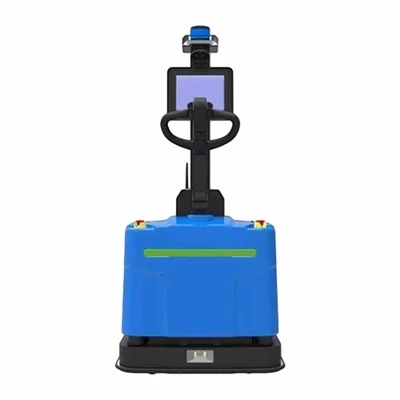
If you’re in the market for automatic pallet forklifts, and you’re tired of unplanned downtime, or worried about safety incidents, hit us up for a chat. We don’t do pushy sales calls—we’ll come to your warehouse, walk the floor, figure out what your specific needs are, and show you exactly how our backup power systems work for your operation. No confusing jargon, no hidden fees, just real solutions for real warehouse problems.
Autonomous Mobile Robot References
- Material Handling Industry Association. (2022). Backup Power Requirements for Automated Guided Vehicles. MHI White Paper.
- Lithium-ion Battery Manufacturers Association. (2023). Deep-cycle Batteries for Industrial Automation. Technical Bulletin.
- Occupational Safety and Health Administration (OSHA). (2021). Safety Guidelines for Automated Forklift Operations. OSHA Publication.
- International Warehouse Logistics Association. (2022). Reducing Downtime in 24/7 Warehouses: Backup Power Case Studies. IWLA Report.
Shenzhen Ginnee Intelligent Warehousing Robotics Co., Ltd.
As one of the most professional automatic pallet forklift suppliers in China, we’re featured by quality products and low price. Please rest assured to wholesale durable automatic pallet forklift in stock here and get quotation from our factory. We also accept customized orders.
Address: Room101, No.162 JunXin Road, Niuhu Community, Guanlan Strect, Longhua District, Shenzhen, Guangdong Province, China.
E-mail: huangyongmei@szginnee.com
WebSite: https://www.ginneerobotics.com/
