If you’ve ever crawled under a car mid-road trip, prying at a creaking, rattling suspension component that turned a smooth highway drive into a jarring bumpy ride, you’ve probably thought about auto bushings. These small, unassuming rubber (or sometimes polyurethane) parts sit between metal suspension components, acting as a cushion to absorb vibration, reduce noise, and keep your wheels aligned properly. As someone who’s worked in the auto bushing supply space for over a decade—first as a quality control tech, then as part of a small, specialized team that makes bushings for both OEM repair lines and the aftermarket—I get asked this question at trade shows, on customer calls, and even at backyard mechanic meetups all the time: Do aftermarket auto bushings actually meet real quality standards? Auto Bushing
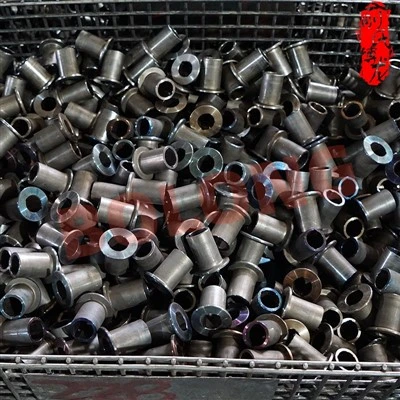
The short answer isn’t a yes or a no. It depends on who’s making them, what materials they’re using, and whether anyone’s actually checking their work against the same rules that govern OEM parts. A lot of consumers and even some independent mechanics assume aftermarket equals lower quality, but that’s a broad, outdated take. Over the years, I’ve seen top-tier aftermarket bushings match or exceed OEM specs, and I’ve seen cheap, knockoff parts that crack after three months of driving over potholes. Today, I want to pull back the curtain on what goes into making a quality bushing, what standards actually apply, and how to tell the difference between a part that’s worth your money and one that’ll end up back on a shelf—or worse, under your car.
First, let’s talk about what a bushing is supposed to do, because that’s the baseline for any standard. A good bushing has three core jobs: it reduces NVH (noise, vibration, harshness) so your ride feels smooth, maintains suspension alignment to prevent uneven tire wear, and transfers the right amount of force between metal parts without slipping or failing. For OEMs, every single part is tested to meet specific SAE (Society of Automotive Engineers) standards, right along with regulatory requirements from places like the EPA and National Highway Traffic Safety Administration (NHTSA). These standards aren’t arbitrary—they’re the result of decades of data about how materials hold up under extreme conditions. Rubber bushings, for example, have to pass tests for temperature resistance (they can’t get too hard in -40°F winters or too soft in 120°F summer heat), durability (they need to withstand thousands of flex cycles without cracking), and load capacity (they have to support the weight of the car during turns and stops).
Now, when aftermarket bushings first blew up in the 90s and early 2000s, the space was pretty unregulated. Small factories would cut corners, using recycled rubber that had degraded, or mixing in cheap fillers to lower costs, without any real testing. That’s where a lot of the bad reputation came from. But over the last 15 years, the aftermarket auto parts industry has evolved a lot. Trade groups like the Automotive Aftermarket Suppliers Association (AAMA) stepped in to create voluntary quality standards, and many reputable aftermarket manufacturers now follow the same SAE specs that OEMs do—sometimes even more, if they’re making performance-oriented polyurethane bushings for racing.
Let’s break down what makes a bushing meet quality standards, and how we test for that at our facility. First, material formulation is everything. For rubber bushings, we use a specific blend of natural rubber and synthetic polymers (like neoprene or EPDM) that we’ve tested to match the hardness and elasticity of OEM parts. Too soft, and the bushing squishes too much, leading to alignment issues; too hard, and it transfers every bump straight to the cabin, causing that annoying creak. We test every batch of rubber using a durometer to check hardness, and we put samples through environmental chambers that replicate 10 years of sun, heat, and cold in just a few weeks. We also test for oil resistance—if a bushing near the engine gets splashed with oil, it can degrade the rubber fast, so our blends have to hold up to common automotive fluids.
For polyurethane bushings, which are popular with performance drivers because they’re stiffer and last longer, the bar is even higher. Polyurethane can be prone to cracking if the formulation is wrong, so we use a specific grade of polyurethane that’s engineered to flex without breaking, and we test each part for tensile strength and abrasion resistance. I’ve seen cheap polyurethane bushings that crack after a single off-road trip, while ours go 100,000+ miles on a standard passenger car with no issues.
Next, there’s the design and fit. A bushing that’s made to the wrong dimensions—even by a millimeter—won’t seat properly, leading to play, noise, or premature failure. That’s why aftermarket manufacturers that take quality seriously don’t just reverse-engineer a part from a worn-out OEM bushing. We use 3D scanning of brand-new OEM parts to get exact measurements, and we test each bushing for press fit and slippage under load. We also test for corrosion resistance on the metal sleeves that are molded into the bushing—if the metal rusts, it can tear the rubber over time, so we use galvanized or chrome-plated steel for all our metal components.
But here’s the thing: not all aftermarket bushing makers follow these steps. I’ve seen parts at auto parts stores that are made with recycled rubber from old tires, which has already lost its elasticity. I’ve seen bushings with metal sleeves that are thin, cheap steel that rusts after a year. These parts might meet the minimum legal standards in some regions, but they don’t meet the same performance specs as quality OEM or aftermarket parts. The key difference is intentionality: reputable manufacturers don’t just make a part to check a box—they make a part to do the job it’s supposed to do, for the life it’s designed for.
I want to be clear, though: “quality standard” doesn’t have to mean identical to OEM. Performance aftermarket bushings, for example, are designed to be stiffer than stock, to improve handling for drivers who want a sportier ride. That’s not a defect—it’s a feature, and as long as those performance bushings meet their own set of tested standards (for durability and load capacity), they’re a legitimate, high-quality option. I’ve worked with racing teams that exclusively use our performance polyurethane bushings because they don’t flex under high g-force turns, and that’s a deliberate choice based on quality, not a compromise.
So how do consumers tell the difference between a quality aftermarket bushing and a dud? It’s not as hard as you think. First, buy from reputable brands—those that have been in the business for years, publish their testing data, and have positive reviews from both mechanics and drivers. Avoid super cheap parts that cost half as much as OEM; if it’s too good to be true, it usually is. Second, check the packaging. Quality aftermarket parts will have part numbers that reference the SAE standards they meet, or notes about testing for temperature resistance and durability. Third, talk to your mechanic. Independent mechanics know which aftermarket parts hold up, and which ones will leave you towing your car back to the shop in six months.
At our company, we’ve spent years refining our processes to make sure every bushing we ship meets or exceeds SAE J1667, the standard specific to rubber suspension bushings, and we test every single batch before it leaves our warehouse. We work with both retail customers and large fleet operators, and we’ve had parts in use for over a decade with zero failures related to manufacturing defects. That’s not luck—it’s investing in good materials, proper testing, and a team that cares about making a part that actually works, not just making a quick buck.
Auto Forks If you’re a mechanic, fleet manager, or even a do-it-yourself driver in the market for auto bushings, you deserve a part you can trust. Aftermarket auto bushings do meet quality standards—you just have to choose the right supplier. Whether you need standard rubber bushings for a daily driver, performance polyurethane bushings for a project car, or anything in between, we have the expertise and tested parts to fit your needs. For more information about our bushing lines, testing protocols, or to discuss bulk or custom orders, we encourage you to reach out to our sales team to start a conversation. Together, we can find the right bushing solution for your application, with the quality and reliability you expect.
References
- SAE International. (2021). SAE J1667: Rubber Bushing Performance Requirements for Automotive Suspension and Steering Components.
- Automotive Aftermarket Suppliers Association (AAMA). (2022). Aftermarket Quality Standards & Certification Program.
- National Highway Traffic Safety Administration (NHTSA). (2020). Consumer Guide to Auto Parts Quality and Safety.
- Polyurethane Development Council. (2019). Polyurethane Automotive Bushing Durability Testing Protocols.
Ningbo Fenghua Bolong Machinery Manufacturing Co., Ltd.
Ningbo Fenghua Bolong Machinery Manufacturing Co., Ltd. is one of the most professional auto bushing manufacturers and suppliers in China, also supports high quality customized service. With abundant experience, we warmly welcome you to buy durable auto bushing made in China here from our factory.
Address: No. 27 Hehai Road, Binhai New Area, Fenghua Economic Development Zone, Ningbo City, Zhejiang Province
E-mail: seven@nbbolongmachinery.com
WebSite: https://www.nbbolongmachinery.com/
