Alright, let’s cut to the chase: if you’re in maintenance work, you’ve probably stared at a 20-foot tall equipment bay, or a warehouse sign that needs re-tightening, and wondered “do I really need to drag out a huge scissor lift that takes 20 mins to set up?” Or maybe you’ve used a ladder that felt like it would tip over if you so much as breathed too hard. That’s exactly where a double mast aluminum alloy lift (let’s just call it a DMAL lift for short, ‘cause no one’s got time to say the full thing every time) comes in. As a DMAL lift supplier, I get all the questions—good and weird—folks throw at me, and one I hear all the time is: “Can this thing actually hold up for maintenance work?” Spoiler: yes, but only if you use it right. Let’s break this down, no tech jargon, just real-world stuff I’ve seen with contractors, facility managers, even plant maintenance crews over the years. Double Mast Aluminum Alloy Lift
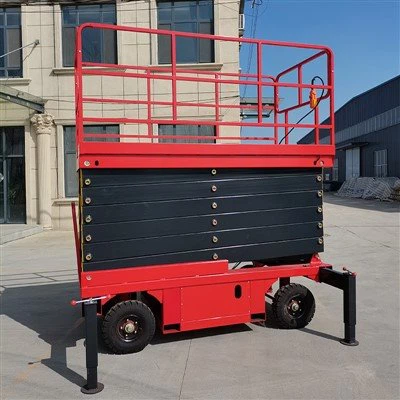
First off, let’s get one thing straight: double mast aluminum alloy lifts aren’t the same as those flimsy single mast ones you see at a local hardware store for hanging Christmas lights. Single mast are great for small, quick jobs, but they wiggle if you’re not dead center. The double mast design is the whole point here—two parallel aluminum masts that work in tandem to cradle the platform, so movement is almost zero, even when you’re leaning over to grab a part 10 feet out from the edge. For maintenance, that stability is non-negotiable. I remember a manufacturing plant engineer who told me he used a single mast lift for changing overhead conveyor sensors, and he’d had to stop every 5 minutes ‘cause it felt like it would sway into a nearby pipe. Switched to our DMAL lift, and he got the whole shift done without a single wobble. That’s the kind of win maintenance crews live for.
Now, let’s talk about the specs that matter for maintenance, not just marketing fluff. Aluminum alloy is key here—it’s lightweight, but way stronger than it looks. We use 6061-T6 aluminum, which is the same stuff used for airplane parts, so it can handle consistent wear and tear, rust (super important if you’re working in damp facilities, food processing plants, or outdoor maintenance), and the occasional bump when you’re rolling it between work sites. Most of our DMAL lifts have a load capacity of 500 to 1000 lbs. Wait, you’re a two-person crew plus tools, right? That’s exactly the sweet spot. Maintenance isn’t just you up there—you’ve got a bucket of wrenches, a power drill, maybe a replacement filter, and your buddy passing stuff up. A single mast might top out at 300 lbs, which would only fit one person and a tiny tool bag. Double mast gives you the space to actually bring everything you need, so you don’t have to make 3 trips up and down. That’s huge for efficiency—especially if you’re working on a deadline, like fixing a refrigeration unit in a grocery store before opening time.
Next up: maneuverability. Maintenance work isn’t in a big, open warehouse every time. You might be squeezing between rows of shelving in a pharmacy, or turning a corner in a narrow office corridor, or working in a tight utility closet entrance. DMAL lifts are compact—most have a width under 3 feet, so they fit through standard doorways (36 inches is the norm) no problem. And they’re self-propelled? Wait, no, wait—we have two types: push-around for small jobs, and self-drive for larger facilities. The push-around ones are great for quick, short moves—you can roll them with one hand while standing on the ground, so you don’t have to climb down, move it, climb back up. That’s a time-saver that cuts down on fatigue, which is a big safety win. Self-drive models let you drive the lift while it’s raised a few feet, so you can move between work sites without lowering the whole thing every time. I’ve seen maintenance teams use that to go from fixing a light fixture to adjusting a ceiling vent in the same area, no hassle.
Now, let’s get real about limitations ‘cause I’m not gonna lie to you. A DMAL lift isn’t for every maintenance job. For example, if you need to reach 60 feet high? No, most go up to 30 or 40 feet max. If you’re working on a sloped surface? Wait, no—they work best on flat, level ground. We always tell folks to use the built-in level sensors, which most modern DMAL lifts have, ‘cause if the ground is even a little off, it can throw off the stability. Also, if you’re doing heavy, rough work, like tearing out old ceiling tiles that weigh 50 lbs each, that’s not really what this is built for. It’s for precise, hands-on maintenance: fixing electrical panels, calibrating sensors, replacing light bulbs, servicing HVAC units, repairing overhead doors, even checking fire suppression systems. That’s where it shines.
Safety is another big one, and this is where a lot of new users mess up. DMAL lifts come with guardrails, non-slip platforms, and emergency stop buttons—you have to use all of them. I once heard a story from a contractor who skipped putting up the guardrails to reach a tight spot, and he slipped and fell (thankfully, not bad). That’s avoidable. Also, training is key. You don’t need a crazy certification for a lot of DMAL lifts, but a 30-minute walkthrough on the controls, how to level it, and how to load the platform evenly goes a long way. We offer free quick training for all our clients, ‘cause safety isn’t something you cut corners on.
Wait, let’s talk about cost too, ‘cause that’s probably on your mind. A lot of maintenance teams think, “why buy a lift when I can rent one?” But here’s the thing: rental costs add up over time. If you’re using a DMAL lift once a week, after a year you’ve spent more in rentals than you would buying one. Also, downtime—if you rent, you have to wait for it to show up, pay extra if you need it on a weekend, and risk it being damaged when you get it (which means you pay fees). Owning one means you have it whenever you need it, no waiting. As a supplier, we’ve had clients buy a DMAL lift for their facility and have it pay for itself in 6 months just from not having to rent, plus the efficiency gains from not making extra trips up ladders. And since aluminum is low-maintenance, you don’t have to spend a fortune on upkeep—just grease the wheels once a month, check the bolts, and you’re good.
I also want to mention some niche use cases that might surprise you. Food and beverage plants, for example—they have super strict hygiene rules, and DMAL lifts are easy to wipe down, no nooks where dirt can get stuck, unlike scissor lifts that have lots of moving parts. That’s a big selling point for facilities that need to follow FDA guidelines. Outdoor maintenance crews use them too, ‘cause the aluminum doesn’t rust, and many have weather-resistant controls, so you can work in light rain without issues. We’ve even had landscapers use them to trim high tree branches and fix outdoor lighting—way safer than a ladder for that.
But let’s circle back to the original question: can a double mast aluminum alloy lift be used for maintenance work? The answer is a resounding yes, but it’s all about matching the lift to the job. If you’re doing maintenance that’s 10 to 40 feet high, needs stability, maneuverability in tight spaces, and a decent load capacity, this is your guy. If you’re doing super high work, or heavy demolition, then you might need a different lift. But for 90% of the maintenance jobs I see day to day—especially commercial, industrial, facility, even residential (for big home maintenance like roof repairs or gutter cleaning) —it’s perfect.
Now, if you’re tired of ladders that feel unsafe, rental lifts that show up late, and wasting time making extra trips, a DMAL lift is worth checking out. We work with all kinds of teams—small facility managers, big manufacturing plants, contractors, even property maintenance companies—and we can help you pick the right model for your specific jobs. No pressure, no pushy sales stuff, just advice based on what works for real maintenance work.
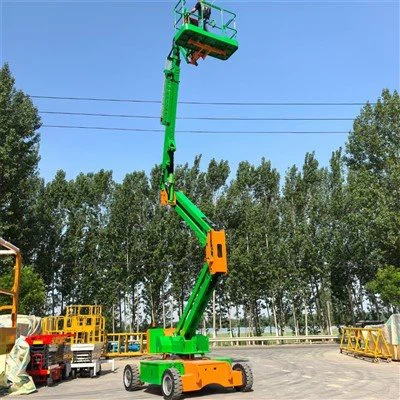
Boom Lift If you want to chat more about specs, pricing, or how a DMAL lift would fit your maintenance routine, just reach out to our team. We’re here to help you find the right solution that makes your job easier, safer, and faster.
References
- Occupational Safety and Health Administration. (2022). Powered Platforms for Building Maintenance: General Requirements. U.S. Department of Labor.
- Aluminum Association. (2021). 6061-T6 Aluminum Alloy Properties and Applications in Access Equipment. Aluminum Industry Data Report.
- National Floor Safety Institute. (2020). Slip Resistance of Industrial Work Platform Surfaces. NFSI Technical Bulletin.
- International Organization for Standardization. (2019). Access Equipment – Self-Propelled Aerial Work Platforms – Safety Requirements. ISO 16071:2019.
Shandong Zhongke Huali Machinery Co., Ltd.
As one of the most professional double mast aluminum alloy lift manufacturers and suppliers in China, we also support customized service. We warmly welcome you to wholesale discount double mast aluminum alloy lift in stock here from our factory. For price consultation, contact us.
Address: No. 2 Qubai Road, Qudi Street, Jiyang District, Jinan City, Shandong Province
E-mail: hlizhonggong@163.com
WebSite: https://www.hualiheavy.com/
