Hey there, if you’ve ever deep-dived into high-frequency electronics, chances are you’ve stumbled on Rogers PCB and had questions like, “What even is this stuff, and why does everyone in aerospace, 5G, or medical gear swear by it?” As a Rogers PCB supplier who’s been in the game for over a decade, I’m breaking this down like I would for a new engineer or small business owner trying to figure out their next prototype—no stuffy jargon, no overcomplicated fluff, just real talk about what makes these PCBs tick, why they matter, and when you actually need to use ’em. Rogers PCB
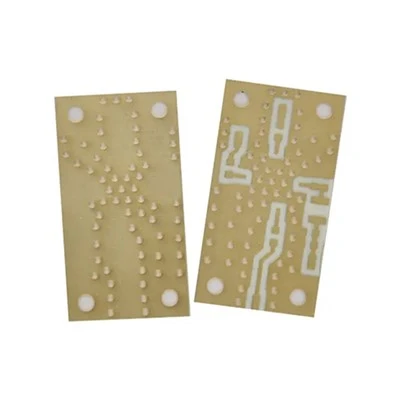
First off, let’s cut the confusion: Rogers PCB isn’t some random type of board you grab off a shelf. It’s a printed circuit board that uses substrates (the base material the circuits get stuck to) made by Rogers Corporation—yeah, that same Rogers that’s been a go-to for advanced materials since the 1800s, not some new startup brand. Wait, hold on—substrates are the key here. Most everyday PCBs you’d find in a remote control or a basic WiFi router use FR-4, a glass-epoxy material that’s cheap, works fine for low frequencies, and is everywhere. But when you get into stuff that operates at high frequencies, like mmWave 5G antennas, satellite transceivers, or MRI machines, FR-4 starts to fall apart. Why? Because at high frequencies, signals don’t just travel along the copper traces—they leak, reflect, or get distorted, leading to lost power, bad connectivity, or even total device failure. That’s where Rogers substrates step in.
Let’s get a bit technical but keep it real, no PhD degree required. The big specs that make Rogers substrates different are dielectric constant (that’s basically how well the material stores an electrical field) and dissipation factor (how much energy the material loses as heat when signals pass through it). For high-frequency apps, you need these numbers to be super stable—no weird shifts when temperatures change or humidity spikes, right? FR-4’s dielectric constant can jump around by like 10% or more under different conditions, which messes up signal timing. Rogers substrates? Their dielectric constant is consistent within 0.5% across temperature ranges from -55°C to 150°C, and dissipation factor is way lower—like 0.002 vs. FR-4’s 0.02 or higher. That means way less signal loss, sharper, more reliable connectivity, and no overheating problems even when your device is cranking out power.
Now, what are these Rogers substrates actually made of? Most of ’em are ceramic-filled hydrocarbons or PTFE (that’s Teflon, for the casual folks reading). Yeah, PTFE is the same stuff your non-stick pans use, but when Rogers processes it right into a high-performance substrate, it’s way different from the cheap plastic you use in the kitchen. The ceramic fillers are key, too—they add that thermal stability I mentioned earlier, so the material doesn’t expand or shrink when it heats up, which prevents your solder joints from cracking or your traces from delaminating (peeling off the board) over time. I’ve seen clients try to skimp by using general PTFE boards for a 28GHz 5G base station, and they were back within a month because the signals were dropping so bad they couldn’t pass compliance tests. Rogers fixed that for ’em in a week, no joke.
Wait, let’s talk about common uses so you know when you actually need a Rogers PCB, not just because it sounds fancy. I work with a lot of clients: aerospace engineers building satellite communication systems, medical device makers making portable MRI scanners that don’t have bulky metal shielding, 5G infrastructure teams designing small cell antennas for dense city areas, automotive companies rolling out ADAS sensors that use mmWave for collision avoidance, and even some space-constrained wearables that need high-speed data transfer without sucking battery life. None of these would work on FR-4. For example, a 5G small cell antenna needs to send and receive signals at 24-40GHz—way higher than the 2.4GHz WiFi most people have at home. At that frequency, even a tiny bit of signal loss adds up fast, and Rogers PCB cuts that loss by like 90% compared to FR-4, meaning the antenna can cover twice the area with the same power. Another example: medical devices that go inside the body, like implantable pacemaker sensors. They need to transmit data without generating too much heat (which could damage tissue) and work reliably even after years of being inside a warm, wet body. Rogers’ stable dielectric properties and low dissipation factor make that possible—FR-4 would overheat and stop working in months.
Now, let’s address the elephant in the room: why isn’t everyone using Rogers PCB if it’s so good? Simple—cost. Rogers substrates are way more expensive than FR-4, like 5 to 10 times more expensive per square inch, and the manufacturing process is trickier, too. Rogers PCBs need specialized equipment to handle the non-standard substrates—regular PCB mills can’t just run their usual panels through their machines, because PTFE and ceramic materials don’t machine the same way FR-4 does. You have to use diamond-tipped cutting tools, adjust the speed and pressure to avoid delaminating the substrate, and even use specific soldering processes that don’t damage the material. That’s why most consumer products, like your phone or laptop, use FR-4—they don’t need the performance, and cost is king. But when performance is non-negotiable, the extra cost is worth it.
As a Rogers PCB supplier, let me also clear up a common myth: not all Rogers boards are the same. Rogers has a whole line of substrates, each tailored for different apps. For example, Rogers RO4350B is great for 5G and aerospace, RO4003C works for lower-frequency high-speed signals like automotive radar, and RO3003 is used for mmWave applications that need super tight dielectric control. I always help my clients pick the right substrate for their specific needs—no upselling the most expensive one if a cheaper Rogers substrate will do the job. Last year, I had a startup working on a portable weather sensor that needed to transmit data via LoRaWAN, a low-power long-range protocol. They initially asked for RO4350B, but after looking at their specs, I recommended RO4003C, which cut their material cost by 30% without sacrificing any performance. They’ve been repeat clients ever since.
Another thing that sets good Rogers PCB suppliers apart is our attention to the small stuff. Rogers substrates don’t play well with just any copper foil—you need special high-peel-strength copper that bonds properly to the PTFE or hydrocarbon material without peeling. Also, the surface finish matters: for high-frequency boards, you can’t just use HASL (hot air solder level) like you do for FR-4. You need something like ENIG (electroless nickel immersion gold) or OSP (organic solderability preservative) that provides a flat, uniform surface—any tiny uneven spot on the copper trace will cause signal reflection at high frequencies. I’ve seen cheap Rogers PCBs from overseas that used the wrong copper foil, leading to 2-3dB more signal loss than they should have, which cost a client a big contract with a telecom company. We test every single board we ship for dielectric constant, dissipation factor, and signal integrity to make sure that never happens to our clients.
Wait, let’s also talk about recent trends. A lot of clients are asking about flexible Rogers PCB too—substrates like Rogers Flex Laminate that can bend or fold, which is perfect for wearable tech or foldable phones. I worked with a client last year making a flexible 5G antenna for a smart watch; they tried a regular flexible FR-4 board, but it cracked after 10,000 flex cycles, so we switched to a Rogers flexible substrate, which passed 100,000 flex cycles with no signal degradation. That’s the kind of thing that makes Rogers stand out—they innovate along with the technology, so we can keep up with 5G, 6G, AI, and all the next-gen stuff.
Now, if you’re someone who’s here because you’re working on a project that might need Rogers PCB, here’s my quick checklist to know if it’s worth going for: are you operating at frequencies above 1GHz? Do you need very low signal loss? Do you need consistent performance across wide temperature or humidity ranges? Are you building a product that needs to last for years in harsh environments? If you answered yes to any of these, you should at least look at Rogers PCB, not stick to FR-4.
At the end of the day, I’ve been doing this long enough to know that there’s no one-size-fits-all answer for PCBs. Rogers isn’t better than FR-4—it’s just better for specific jobs. That’s why my team and I don’t just sell boards; we help clients figure out what they actually need, troubleshoot issues, and make sure their products work as intended. If you’re working on a high-frequency, high-reliability project, whether it’s a prototype or a full production run, I’d love to chat with you to go over your specs, compare substrate options, and give you a fair quote. No pushy sales talk, just honest advice for your project.

If you want to connect to talk more about Rogers PCB for your next design, feel free to reach out and we can work through your requirements together.
Single Layer FR4 PCB Board References
- Rogers Corporation. (2024). High Frequency Material Data Sheets. Rogers Corporation.
- Microwave Journal. (2023). "Dielectric Material Selection for mmWave 5G Antennas." Microwave Journal.
- Institute of Electrical and Electronics Engineers (IEEE). (2022). "Performance Analysis of Rogers vs. FR-4 Substrates for High-Frequency Applications." IEEE Transactions on Components, Packaging, and Manufacturing Technology.
- Rogers Corporation. (2024). Flexible Substrates for Advanced Electronics. Rogers Corporation.
Fastline Circuits Co., Limited
Fastline Circuits Co., Limited is one of the most professional rogers PCB manufacturers and suppliers in China. With abundant experience, we warmly welcome you to wholesale durable rogers PCB made in China here and get quotation from our factory. All customized products are with high quality and competitive price.
Address: Room 301, Building B3, Fuqiao 4th District, Qiaotou Community, Fuhai Subdistrict, Bao’an District, Shenzhen, Guangdong Province, China
E-mail: sales@fastlinepcb.com
WebSite: https://www.fastlinepcb.net/
