If you’ve ever reached out to us for a quote on custom, special purpose machinery (SPM), you’ve almost certainly asked this question: How long is this going to take? More than just a technical detail, this timeline shapes every part of your project—from your production schedule to your team’s prep work, even your budget’s cash flow. For years, I’ve fielded this question at our SPM shop, surrounded by half-assembled robotic workcells, custom jigs, and the kind of precision parts that make standard factory machinery look like Lego. What I want to do today is pull back the curtain on that timeline—not give a generic number, but break down exactly what goes into building SPM, and why that process takes as long as it does. No marketing fluff, just the real stuff we deal with every day. Special Purpose Machinery

First, let’s get one thing straight: special purpose machinery is nothing like the off-the-shelf conveyor belts or CNC routers you can order and have shipped in three days. Off-the-shelf equipment is designed for mass production, with fixed specs to suit 80% of common manufacturing needs. SPM is built for the other 20%—the unique, often messy challenges no standard machine can solve. Maybe you need a machine that wraps medical catheters without kinking them, or one that sorts 12 different sizes of custom automotive fasteners at 1,200 parts per minute, or one that tests aerospace turbine blades for micro-cracks in 10 different orientations. Each of these needs is one-of-a-kind, and that’s where the timeline starts to stretch.
Let’s walk through a typical SPM project step by step, using an example from last year: a custom assembly machine for a client that makes portable home water filters. They came to us because their old manual line could only produce 40 filters an hour, and they needed to hit 200 an hour without sacrificing the 99.9% accuracy required for their FDA-cleared product. From that first call to running full production, the project took 16 weeks—and that’s actually a pretty tight timeline for a project with that level of complexity. Let’s break that down week by week to show you why:
Weeks 1–3: Discovery & Specification Lock
When a client first reaches out, I can’t just pull a machine from a shelf and adjust it. The first step is sitting down with their team—engineers, line leads, quality control heads—to map every single requirement. For that water filter project, we spent three full days in their factory watching their line run, taking notes on how their filters moved, where bottlenecks happened, what parts were prone to jamming, even the temperature of their plant floor (that’s a big one for plastic parts that warp if they sit too close to a heat vent).
Then we dive into the fine print: What’s the minimum speed? What tolerance can you accept for misaligned parts? Does this machine need to integrate with your existing ERP system? Do you have a 24/7 production schedule, so downtime for maintenance has to be planned for? For the water filter client, one non-negotiable was that the machine had to handle three different filter sizes, with no changeover time longer than 10 minutes. That kind of detail doesn’t come from a spec sheet—it comes from talking to the people who run the line every day.
During these three weeks, we also have to identify constraints the client might not mention. For example, if a part of the machine needs a custom-made stainless steel bracket, do they have a load dock at their facility wide enough to fit a 12-foot long machine? Will their electrical panel support a 480V power draw, or do we need to add transformers? These questions aren’t trivial—miss one, and you end up with a machine that works in our shop but doesn’t fit in theirs. By the end of week three, we send over a formal spec, and once the client signs off, that’s our baseline. No changes after this point mean no timeline creep—simple as that.
Weeks 4–7: Design & Engineering
This is the part that separates good SPM suppliers from great ones. Some shops will grab off-the-shelf components and hack them together, but we design every part of the machine from scratch, tailored to the client’s needs. For the water filter project, our team started with 3D CAD models: first, a digital twin of the existing line, so we could place our new machine between the washer and packaging station without disrupting flow. Then we designed the assembly stations: a gripper that could handle both small filter heads and large canisters, a press that applied the seal with just enough force (too much, and the plastic cracks; too little, and it leaks), a vision system that inspected each weld in 0.2 seconds.
During these four weeks, we run multiple iterations. For example, our first gripper design kept dropping the thin filter heads, so our mechanical engineer redesigned it with a soft, silicone-coated pad and a pressure sensor that could adjust grip force. Our electrical engineer had to program the vision system to distinguish between three filter types, each with slight variations in color and texture—something that wouldn’t matter for a standard camera, but was make-or-break for this client. We also share weekly updates with the client here: not just drawings, but videos of test parts, so they can sign off every step of the way. This avoids the dreaded “surprise revision” that can add weeks to a project.
What if the design is more complex than we initially thought? For example, a recent project for a battery component maker required a machine that stacked 50 ultra-thin lithium foils, each just 0.05mm thick—thinner than a human hair. That kind of precision adds 2–3 weeks to the design phase, because we have to test different gripper materials, sensor types, and alignment systems to avoid damaging the foils. There’s no shortcut here; cutting corners in design means a machine that breaks down in six months, which is a way worse delay than adding a few weeks upfront.
Weeks 8–12: Fabrication & Component Sourcing
Once the design is locked, the next phase is building the machine. This is where our shop comes alive: machinists turning aluminum and stainless steel parts on lathes and mills, electricians running wire harnesses, programmers testing the logic that makes the machine move. But here’s a key point: SPM relies on both custom parts and off-the-shelf components, and sourcing can make or break the timeline.
For standard parts—plumbing fittings, motor drives, PLC controllers—we have pre-vetted suppliers that can deliver in 1–2 weeks. But custom parts? For the water filter machine, we needed 12 custom-machined brackets, a custom rotary table for the assembly stations, and a custom clear safety guard that fit the exact footprint of the machine. Custom parts can take anywhere from 2 weeks to 8 weeks, depending on material and complexity. For the battery foil stacker I mentioned earlier, the custom vacuum grippers we needed were lead times of 6 weeks, because they had to be made from a specialized aluminum alloy that could hold a vacuum without damaging the foils.
This is where our years of industry connections pay off. We don’t just work with the first machine shop that quotes us—we have relationships with 15+ local and regional suppliers that prioritize our orders because we’ve delivered on time for 12 years. For critical parts, we’ll even order two parts at once if the lead time is tight, just to have a backup. But even with that, if a global supply chain delay hits a critical component (like a servo motor made in Europe), that can add a week or two. In the last three years, we’ve had three projects delayed by port backups, each adding about 10 days to the timeline. It’s unpredictable, but we build buffer time into every project to account for that.
Weeks 13–15: Assembly, Testing, & Fatigue Runs
By week 13, all the parts are on-site, and we start assembling the machine in our shop. This isn’t just bolting parts together—we’re aligning linear rails within 0.01mm, programming the HMI (human-machine interface) so your line operator can change settings with a tap of a screen, and integrating all the safety features that keep your team safe: light curtains, emergency stops, interlocks that shut down the machine if a guard is open.
Then comes the most important part: testing, specifically fatigue runs. This is where we run the machine at full speed for 8–12 hours straight, simulating 1–2 weeks of production to catch any bugs before it leaves our facility. For the water filter machine, we ran it at 220 filters per hour (10% over the client’s required speed) for 12 hours. That’s when we found a small issue: the conveyor belt that carried the filters was stretching slightly under load, causing parts to misalign. We swapped in a reinforced belt, adjusted the tension, and ran another 6 hours of testing to confirm it worked.
We never ship a machine that hasn’t passed a full production test. I’ve seen too many SPM suppliers cut corners here to hit a deadline, only to have the machine break down on the customer’s floor a week after installation. A 2-day delay in our shop to fix a minor issue is nothing compared to shutting down a $10 million a month production line. This phase almost always takes 2–3 weeks, regardless of the project—there’s no way to skip it and guarantee a reliable machine.
Week 16: Installation, Training, & Final Sign-Off
The final week is when we load the machine onto a truck, ship it to your facility, and install it. Our team will spend 3–5 days on-site hooking up power, air, and any connections to your existing lines, then running the machine through another set of tests with your team. Then we train your operators and maintenance staff: how to change parts, how to reset faults, how to do routine daily checks. For the water filter client, we had two operators and one maintenance technician on-site for two days of training, so they felt comfortable running the machine before our team left.
By the end of week 16, the machine is up and running, hitting the required speed and accuracy, and the client signs off. Is this timeline set in stone? No. A project with simpler requirements might take 10–12 weeks, while a highly complex machine (like the aerospace turbine blade tester I mentioned earlier) can take 24–30 weeks. Every project is different, and we will always give you a realistic, detailed timeline during the first few weeks of discovery, not a guess.
Now, I know some of you are thinking: “16 weeks is a long time. Can’t you build it faster?” The short answer is no—not without cutting corners that will cost you more in the long run. Let’s be clear: SPM is a custom tool for your business. Rushing the design means missing a requirement that leads to downtime for months. Rushing the fabrication means using lower-quality parts that break after a year. Rushing testing means a machine that can’t hit your production targets. We’ve had clients ask for a project to be done in 8 weeks before, and every time, when we push back, they remember why that was a bad idea. One client tried to rush us once, only to receive a machine that had a design flaw, costing them $2 million in lost production over three months while we fixed it. They came back to us for their next project, knowing that taking the time to do it right is worth the wait.
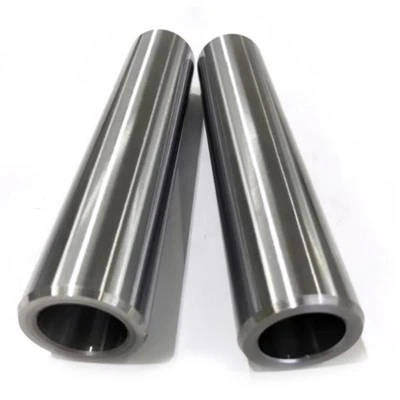
CNC Turning Parts At the end of the day, the timeline for your special purpose machinery depends on three core things: complexity, customization, and rigor. Every part of that timeline is there to ensure your machine works exactly as you need it, for years to come. If you’re ready to talk about your project, whether it’s a simple machine to increase your line speed or a complex custom workcell for a new product line, our team is here to walk you through every step, give you a clear timeline, and answer any questions you have. Let’s work together to build something that makes your production better, more reliable, and more profitable.
Suzhou Huaquan Electromechanical Manufacturing Co., Ltd.
As one of the leading special purpose machinery manufacturers in China, we warmly welcome you to buy bulk customized special purpose machinery made in China here from our factory. If you have any enquiry about pricelist and free sample, please feel free to email us.
Address: No.7550 Mudong Road, Hengjing Town, Wuzhong District, Suzhou City, Jiangsu Province, China
E-mail: Huaquan2005@outlook.com
WebSite: https://www.huaquancnc.com/
