A door closer is a common yet essential device used in many buildings. It ensures that doors close automatically after being opened, which is not only convenient but also crucial for maintaining security and energy efficiency. At the heart of many door closers lies a spiral spring, a component that plays a pivotal role in the functionality of the door closer. As a supplier of spiral springs, I’d like to delve into the design principles of a spiral spring in a door closer. Spiral Spring
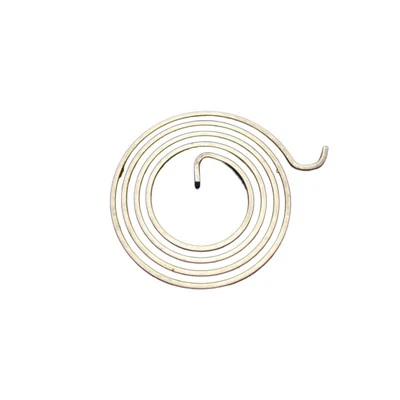
Basic Function of a Spiral Spring in a Door Closer
The primary function of a spiral spring in a door closer is to store and release energy. When a door is opened, the spiral spring is wound up, storing potential energy. As the door is released, the spring unwinds, converting the stored potential energy into kinetic energy, which drives the door to close. This simple yet effective mechanism allows for a smooth and controlled closing motion.
Material Selection
The choice of material for a spiral spring in a door closer is of utmost importance. It needs to have high strength, good elasticity, and corrosion resistance. Commonly used materials include carbon steel, stainless steel, and alloy steel.
Carbon steel is a popular choice due to its relatively low cost and high strength. However, it is prone to corrosion, so it often needs to be coated or treated to enhance its durability. Stainless steel, on the other hand, offers excellent corrosion resistance, making it suitable for applications in humid or corrosive environments. Alloy steel combines the advantages of different elements, providing a balance of strength, elasticity, and corrosion resistance.
Geometric Design
The geometric design of a spiral spring significantly affects its performance. Key parameters include the number of coils, the pitch between coils, the wire diameter, and the outer diameter of the spring.
The number of coils determines the amount of energy that the spring can store. More coils generally mean more energy storage capacity. However, too many coils can also increase the friction and resistance within the spring, affecting its efficiency. The pitch between coils is also crucial. A proper pitch ensures that the spring can wind and unwind smoothly without getting jammed.
The wire diameter affects the strength and stiffness of the spring. A thicker wire will result in a stronger and stiffer spring, which can generate more force but may also require more effort to wind. The outer diameter of the spring needs to be carefully designed to fit within the door closer mechanism. It should be large enough to provide sufficient space for the spring to wind and unwind but not too large to cause interference with other components.
Load and Stress Analysis
Understanding the load and stress distribution within the spiral spring is essential for its design. When the door is opened, the spring experiences a torsional load as it is wound up. The stress within the spring should be within the allowable range to prevent permanent deformation or failure.
Engineers use various methods to analyze the load and stress, such as finite element analysis (FEA). FEA allows for a detailed simulation of the spring’s behavior under different loads, helping to optimize the design and ensure its reliability. By analyzing the stress distribution, designers can identify areas of high stress and make appropriate adjustments, such as changing the wire diameter or the number of coils.
Fatigue Resistance
A door closer is a frequently used device, and the spiral spring within it is subjected to repeated cycles of loading and unloading. Therefore, fatigue resistance is a critical factor in the design.
To improve fatigue resistance, the spring material needs to have good ductility and a high fatigue strength. The surface finish of the spring also plays an important role. A smooth surface can reduce stress concentrations and prevent the initiation of cracks. Additionally, proper heat treatment can enhance the fatigue resistance of the spring by improving its microstructure.
Compatibility with the Door Closer Mechanism
The spiral spring needs to be designed to be compatible with the overall door closer mechanism. It should fit seamlessly into the housing of the door closer and work in harmony with other components, such as the gears, cams, and hydraulic dampers.
The spring’s force characteristics need to match the requirements of the door closer. For example, if the door is heavy or has a large opening angle, a spring with a higher force output may be needed. The installation method of the spring also needs to be considered to ensure easy and secure mounting.
Customization for Different Applications
Different door closers are used in various applications, such as residential doors, commercial doors, and industrial doors. Each application has its own specific requirements, and the spiral spring needs to be customized accordingly.
For residential doors, a spring with a relatively lower force output may be sufficient, as the doors are usually lighter. In commercial buildings, where there is a higher volume of traffic, the spring needs to be more robust and have a longer service life. Industrial doors often require springs with high force and durability to handle heavy loads and frequent use.
Quality Control
As a spiral spring supplier, quality control is of utmost importance. We implement a comprehensive quality control system throughout the manufacturing process.
Starting from the raw material inspection, we ensure that the materials meet the required specifications. During the manufacturing process, we use advanced production equipment and strict process control to ensure the accuracy of the spring’s geometric dimensions and the consistency of its performance. After production, each spring undergoes a series of tests, including load testing, fatigue testing, and stress analysis, to ensure that it meets the quality standards.
Conclusion

The design principle of a spiral spring in a door closer involves a combination of material selection, geometric design, load and stress analysis, fatigue resistance, compatibility with the mechanism, and customization for different applications. By carefully considering these factors, we can produce high – quality spiral springs that meet the diverse needs of door closer manufacturers.
Torsion Spring If you are in the market for spiral springs for your door closers, we are here to offer you the best solutions. Our team of experienced engineers can work with you to design and manufacture custom – made spiral springs that precisely match your requirements. Whether you need springs for small residential doors or large industrial doors, we have the expertise and resources to deliver. Contact us today to start a procurement discussion, and let’s work together to create the perfect door closer solution.
References
- Shigley, J. E., & Mischke, C. R. (2001). Mechanical Engineering Design. McGraw – Hill.
- Budynas, R. G., & Nisbett, J. K. (2011). Shigley’s Mechanical Engineering Design. McGraw – Hill.
- Callister, W. D., & Rethwisch, D. G. (2010). Materials Science and Engineering: An Introduction. Wiley.
Shengzhou Deyuxiang Hardware Accessories Co., Ltd.
We are one of the most professional spiral spring manufacturers and suppliers in China, also support customized service. With abundant experience, we warmly welcome you to buy high quality spiral spring made in China here and get pricelist from our factory. For price consultation, contact us.
Address: No. 38, Caosheng Road, Caoqiao Street, Pinghu City, Jiaxing City, Zhejiang Province
E-mail: 877286126@qq.com
WebSite: https://www.dyx-spring.com/
