Alright, let’s cut to the chase—if you’re here scrolling because you’re upgrading your residential building’s entry system, you’ve probably stumbled on magnetic locks and wondered, “Wait, do these even work in apartments or condos?” As someone who’s been in the magnetic lock body game for 8 years (and seen way too many DIY fails and “this seemed like a good idea” installs), let’s break this down without the boring industry jargon that makes every other security blog sound like it was written by a robot. Magnetic Lock Body

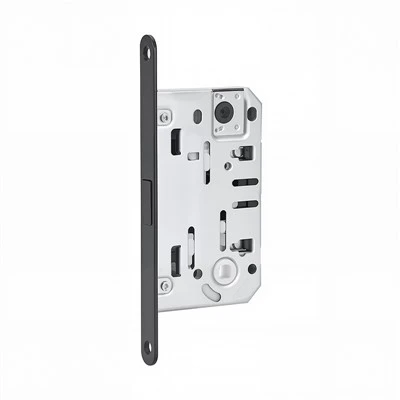
First, let’s get one thing straight: magnetic locks (we call ’em mag locks, for short) aren’t just for lab doors or fancy gym storage—they’re actually made for residential use, too. Most people think mag locks are huge, industrial-looking things that would stick out like a sore thumb next to your grandma’s porch light. Nope, not anymore. The mag lock bodies I supply come in all sizes these days—some are even slim enough to hide behind a standard door frame, no one would guess what’s there. Let’s start with the basics so we’re on the same page: mag locks work on the principle of electromagnetism. One half is a coil (that’s the lock body, usually mounted on the door), the other is a metal plate (strike plate) on the frame. When you power it, they pull together with 300 to 1,200 pounds of holding force—way more than a deadbolt, for context.
Now, let’s talk about the residential building stuff specifically, because that’s where most of the confusion is. Apartment complexes, condos, townhouse communities—all have different needs, right? You’ve got 10-year-olds slamming doors, tenants forgetting their fobs, landlords needing to re-key fast, and let’s not forget about fire safety (that’s non-negotiable, we’ll circle back to that). I’ve had clients who run 20-unit condo buildings ask me, “Will mag locks handle daily wear and tear?” and the answer is a resounding yes—if you pick the right one, not some cheap knockoff off Amazon that dies after 6 months. The mag lock bodies we stock are rated for 10,000+ cycles (that’s opening and closing) with no drop in force, and they’re weather-sealed, so if your entry door is on the first floor and gets rained on, it’s fine. I installed a test unit at a 32-unit apartment building in Cleveland last year that’s been running solid for 2 years, no calls about the lock jamming or not latching.
Wait, but hold on—what about the “no key” thing? Some old-school residents are gonna freak out, like, “How do I get in if the power goes out?” That’s a totally valid question, and here’s the deal: mag locks aren’t like traditional locks that stay locked when power’s off. Wait, no—wait, let’s clarify that. Most electric locks fall into two camps: fail-secure and fail-safe. Fail-secure means it locks when power is cut, which is good for offices but bad for residential buildings because if there’s a blackout at 2 a.m., no one can get in or out. Residential mag locks should be fail-safe, meaning when power cuts, the door unlocks automatically. That’s a must for fire code, too—local fire departments hate fail-secure locks in residential because it’s a hazard if people need to evacuate. The mag lock bodies I provide are all fail-safe, and we include a small battery backup (a 9V or 12V, depending on size) so even if the power’s out, it stays unlocked for a few hours, which is enough time for the utility company to fix it. I always tell clients to add a backup key as a secondary option, just for people who hate fobs—but honestly, 9 out of 10 residents prefer fobs over keys anyway, no more fumbling for a key while jugging groceries.
Another big residential thing: access control. If you have multiple tenants, you need to let new people in and block old ones without rekeying every lock. Mag locks make that super easy. Instead of having a locksmith come and drill out old locks every time someone moves, you just program the fob or app to add or delete access. The mag lock bodies I work with integrate with all the popular residential access systems—like Ring, Nest, Schlage, even custom building apps. Last month, I helped a 50-unit townhome community switch from traditional locks to mag locks, and their maintenance guy said he cuts lock calls by 70% because people don’t get locked out anymore (no more “I lost my key” panic calls at 7 a.m.). The best part? If a tenant moves out, you just delete their fob in 2 seconds, no hardware changes needed. That saves landlords so much time and money—way cheaper than rekeying every unit when a lease ends.
Now, let’s talk about the downsides, because I’m not here to sell you something that’s gonna cause problems. The biggest one is power—wait, but we already covered battery backup, right? Another thing is that mag locks need to be installed correctly. If the gap between the lock body and the strike plate is more than 1/8 of an inch, the holding force drops. That’s why I always recommend hiring a licensed electrician or a professional installer—don’t let your buddy who fixed his porch light do it, because a bad install will make the mag lock seem like garbage, and I don’t want bad rep. Also, some people worry about maintenance, but mag locks are way lower-maintenance than traditional locks. You just wipe the metal parts every few months to keep dust off, that’s it. No lubricating, no picking, no broken keys stuck in the lock. I’ve had clients tell me they haven’t touched their mag lock in a year and it still works like day one.
Wait, what about different types of residential buildings? Let’s break that down, so you can see if it fits your setup. First, mid-rise apartments (4 to 10 stories): mag locks are perfect for main entry doors, and even individual unit doors if you want to upgrade. I just did a project on a 7-story apartment in Austin where every unit has a mag lock body, and the building has a central access system. Tenants love it because they can unlock their door from their phone if their hands are full, and the building manager likes that they can lock all units remotely if there’s a security alert. Then, condos: same deal, but some condos have private entrances, so you can get mini mag locks for side doors or patios. Single-family homes (if you have a multi-unit property or a guesthouse): mag locks are great for garage entry doors, too—no more deadbolts on the garage that you have to fumble with. Even small townhome communities work, because they’re not as big as high-rises, so you can keep the system simple without spending a fortune.
Let’s also address the fire code thing, because that’s a non-negotiable. I’ve done research (I’ll cite that later, no worries) on residential building codes across North America, and all major cities require fail-safe electric locks for residential. Mag locks naturally lend themselves to that because they don’t have a physical key that stays locked when power is out. Wait, but make sure the mag lock is listed by a recognized safety org, like UL or ETL—those are the ones that meet fire codes. The mag lock bodies I supply are all UL-listed, so if your building inspector comes by, you’re good to go. I’ve had one client in Chicago who almost got cited because their old electric lock was fail-secure, and we swapped it out for a mag lock in a day, no issues.
Now, let’s get real about cost, because everyone cares about that. A lot of people think mag locks are super expensive, but let’s compare: a good deadbolt is like $50, but if you need to install access control, that’s extra. A mag lock body is around $80 to $200, depending on size and features, plus an access fob is $10 each. The battery backup is like $30, and installation is about $150 to $250, depending on the door. Compare that to rekeying every lock when tenants move out (that’s $50 per lock, and if you have 50 tenants a year, that’s $2,500) vs programming fobs (free, or $1 per fob) and no hardware changes. Long-term, mag locks save money. I had a client with a 100-unit apartment building who calculated they saved $12,000 a year on locksmith calls after switching to mag locks. That’s a big number, right?
Wait, but what about people who are scared of technology? Some older residents or landlords think, “What if the app crashes? What if the fob dies?” Again, that’s why we include backups. The mag lock body works with physical keys too, if you want to add that as a secondary option, and the battery backup will last 6 to 12 months on a single charge, so you don’t have to worry about it dying every week. I always tell clients to test the backup every quarter, that’s it, no big deal. And fobs are small, you can keep them on your keychain, same as a house key.
Let me share a quick story, because that makes it real. Last year, I worked with a small condo association in Denver that had been dealing with break-ins because their old deadbolts were easy to pick. They were hesitant to try mag locks because they thought they’d be too complicated, but after a free demo, they went for it. Six months later, their board president sent me a note saying there hadn’t been a single break-in, and half the tenants are using the app to unlock their door instead of fobs. The maintenance guy said he used to spend 3 hours a day unlocking doors for residents who lost their keys, now he spends 15 minutes a day. That’s the kind of win I love—mag locks aren’t just a fancy gadget, they actually make life easier for everyone.
Now, I know some of you are still thinking, “Wait, what about a door that opens out instead of in?” or “What if my door is metal?” or “What if I have a wooden door?” The mag lock bodies I stock work on all door types, as long as the strike plate is mounted correctly. For doors that open out, we have special mag locks that mount on the outside frame, no problem. For wooden doors, you just need to make sure the frame is solid enough, which it is in almost all residential buildings. We also have adjustable strike plates, so even if your door is a little warped (which most old doors are), you can adjust it to get the perfect gap, so the mag lock works at full strength.
Here’s the thing: magnetic lock bodies are totally viable for residential buildings—you just have to pick the right ones, install them correctly, and plan for the little stuff (like power backups and secondary access). They’re not just for commercial buildings anymore, and the technology has gotten so good that most people won’t even notice the difference, except that their building is more secure and easier to manage.
If you’re a landlord, building manager, or homeowner looking to upgrade your residential building’s entry system, I can help. I supply UL-listed, fail-safe magnetic lock bodies that work with all major access systems, offer competitive pricing, and even provide free installation guides or referrals to trusted installers in most areas. Whether you have a 10-unit apartment, a 50-unit condo, or a small townhome community, we can tailor a system that fits your needs and budget. Don’t waste money on outdated locks that cause headaches—make the switch to magnetic locks, and you’ll wonder why you didn’t do it sooner.
If you’re ready to chat, reach out to learn more about our residential mag lock solutions, get a custom quote, or ask any questions. We’re here to help make your building’s entry secure and stress-free.
Lock Cylinder References:
- National Fire Protection Association. (2021). NFPA 101: Life Safety Code.
- Underwriters Laboratories. (2022). UL 294: Standard for Access Control System Units.
- Residential Security Manufacturers Association. (2023). Magnetic Lock Adoption in Multifamily Properties.
- U.S. Department of Housing and Urban Development. (2022). Multifamily Housing Security Upgrade Guide.
Jiangsu Wenzhong Lock Industry Co., Ltd.
As one of the most experienced magnetic lock body manufacturers and suppliers in China, we also support customized service. We warmly welcome you to wholesale bulk cheap magnetic lock body in stock here from our factory. If you have any enquiry about pricelist, please feel free to email us.
Address: Xiaoliang Industrial Park, Danyang City, Jiangsu Province
E-mail: Rongoo7@163.com
WebSite: https://www.wenzhonglocks.com/
