I’ve spent nearly a decade installing and supplying rooftop artificial turf for urban residential buildings, boutique cafes, and even small commercial office terraces, and I’ll admit—for years, I got the same question from property managers, homeowners, and even friends: “It looks great during the day, but does rooftop artificial turf look tacky or weird at night?” Rooftop Artificial Turf

That question stumped me a little at first. Back when I started, most artificial turf was made with a single flat polyethylene strand, dyed a generic, almost neon green that glowed harshly under parking lot lights or street lamps. It looked artificial enough during the day, but at night? It looked like a giant plastic play mat dumped on a roof—no depth, no warmth, just that flat, garish neon that drew stares and complaints from nearby residents who’d see the glow through their bedroom windows. For a while, we sold a lot of that turf, but I noticed most of our repeat business came from places like dog daycares, not from residential spaces where people actually wanted to relax after work. I knew there had to be a better way to make rooftop turf work after the sun went down.
Let’s start with the basics: most people don’t realize that artificial turf’s night look isn’t fixed—it’s entirely dependent on three things: the turf’s fiber design, the lighting you pair it with, and even how the roof itself drains or reflects light. I’ve worked on over 200 rooftop turf projects now, and I can tell you that the days of the flat, neon green night turf are long gone.
First, the turf itself. Today’s high-quality rooftop artificial turf is designed with multi-tonal fibers, not a single uniform color. You’ve got primary “blades” that are a rich, muted sage or forest green, and then interspersed with them are shorter, lighter brown or tan “thatch” fibers that mimic the dead lower growth of natural grass. At night, this mix of heights and colors does something magic: when light hits it, the shorter thatch fibers catch small amounts of illumination and create tiny, soft dots of color, while the longer green blades hold a deeper, more consistent tone. It’s not flat anymore—it looks like actual grass, even when the only light is a pair of low-voltage path lights set 10 feet away, or the soft glow of a patio heater in the corner. I learned this from a project a few years ago: a 1,200-square-foot rooftop terrace for a family in Brooklyn. They’d originally chosen that old flat neon green turf because it was cheap, but after we replaced it with our standard multi-tonal rooftop turf, they told us their biggest surprise was how it felt “cozy” at night, not like a plastic yard.
Another key design feature for night performance is the turf’s pile weight and density. Rooftops are different from ground-level lawns—they don’t get trampled by kids and dogs every day, so you can use a slightly denser pile without worrying about it getting matted down. Denser turf means the blades stand upright instead of lying flat, and at night, upright blades reflect light much more softly. Thin, flat blades scatter light in harsh, random directions, while upright blades catch light at a consistent angle, creating a uniform, gentle glow that doesn’t glare or draw unwanted attention. I’ve seen this play out on a small commercial project in Manhattan: a rooftop break room for a tech startup that has 20 employees coming up there for lunch and after-work drinks. They initially went with a cheaper, thinner turf because they thought it would be lighter on the roof (a valid concern—roof weight is a big factor for rooftop projects, by the way), but at night, the thin turf looked washed out under the string lights they hung. We swapped it for a denser, lighter-weight artificial turf (modern manufacturing has cut pile weight by 30% in the last five years without losing durability, so there’s no trade-off anymore), and suddenly the string lights bounced off the blades evenly, creating a warm, inviting space instead of a dim, patchy one.
Now, lighting is half the battle. No matter how good the turf is, bad lighting will make it look bad at night. I always tell clients that the best lighting for rooftop artificial turf is low-voltage, warm-toned, and unobtrusive. Warm light (2700K to 3000K on the Kelvin scale) is the same color as traditional incandescent bulbs, and it brings out the natural tones of the turf—cool blue or white light will make even the nicest turf look flat and artificial after dark. We recommend string lights, but not the cheap ones that cast harsh, hot light every few inches. Look for string lights with small, spaced-out bulbs, or even better, recessed LED deck lights that are sunk into the edges of the rooftop, so the light is aimed up at the turf instead of out at the street or adjacent windows. That way, you get illumination on the grass without washing it out or causing glare.
I also learned a trick from a landscaper colleague: adding small amounts of ground cover or potted plants around the edges of the turf area. Even a row of small boxwood shrubs or trailing ivy in planters softens the transition between the turf and the rest of the rooftop (or the city skyline) at night. The dark green of the shrubs contrasts gently with the turf, making the grass look even more realistic, not like a foreign object plopped on the roof.
Wait, let’s address the elephant in the room: weight. A lot of people worry that artificial turf is too heavy for rooftops, especially if you’re laying it over an existing membrane. But modern rooftop artificial turf is designed to be lightweight, with most high-quality brands coming in at around 5 to 7 pounds per square foot. For comparison, a small patio with 100 square feet of turf is only 500 to 700 pounds—less than a few pieces of outdoor furniture or a couple of planters filled with soil. That’s a non-issue for most modern rooftops, which are built to handle much heavier loads. We always do a quick roof load check with clients before any project, just to be on the safe side, but I’ve never had a client turn down turf because of weight concerns related to nighttime setup.
Another common concern is drainage. Rooftops need proper drainage to prevent water from pooling, and old artificial turf used to be a problem because it didn’t drain well, leading to standing water that would look ugly at night and even damage the roof membrane. But today’s rooftop turf has perforations all along the back of each fiber, and the base layer is made of porous, non-woven fabric that lets water pass through at rates up to 50 inches per hour. That means after a rainstorm, the turf dries in a couple of hours, and there’s no standing water to reflect harsh street lights or make the area look slick at night. I had a client in Chicago who was worried about this, since their rooftop gets heavy rain and snow in the winter. We installed a porous base and a perforated turf, and last winter, they told me the turf dried completely within three hours of a 2-inch snow melt—no pooling, no messy ice patches ruining the look at night.
Now, let’s talk about how it actually feels at night, because looks aren’t everything. I’ve spent many evenings on rooftops I’ve installed, sitting on a patio chair, sipping a drink, and looking at the turf at night. The best turf doesn’t just look good—it feels good under bare feet, even when it’s cool out. Unlike natural grass, which gets dewy or damp at night, high-quality artificial turf is treated with anti-static and moisture-repellent coatings, so it stays dry to the touch. I’ve had kids run around barefoot on a rooftop turf at 10 PM after a barbecue, and their parents didn’t complain about their feet getting muddy or wet—something that would never happen with natural grass, especially in a city.
There are still some misconceptions, though. A few years ago, I got a call from a property manager in Queens who wanted to replace a patch of natural grass on a roof, but he was worried that at night, the turf would glow so bright that it would disturb the residents in the building next door. We went to see his rooftop at night, and I realized he’d been looking at a neighbor’s old turf—the flat neon green type that glows like a light board. We showed him our multi-tonal turf, paired with low-voltage lighting, and he couldn’t believe the difference. The turf had a soft, muted glow, not a harsh one, and it didn’t reach more than 10 feet up, so it didn’t bother the adjacent building’s residents. He went with our turf, and I checked in six months later—he said most residents on his rooftop spent more time there at night now, instead of avoiding it because it felt “fake.”
What about maintenance? People always ask if artificial turf needs work to look good at night, and the answer is almost no. Unlike natural grass, which needs mowing, watering, and fertilizing to keep its color at night, artificial turf just needs a quick rinse every few months, and a rake to pull up any leaves or debris that might settle in the blades. It doesn’t turn brown in the winter, it doesn’t get weeds growing through it, and it doesn’t get patchy from foot traffic. That means it looks the same on a cold December night as it does on a warm June night—no dead spots, no uneven color.
I think the biggest shift I’ve seen in the last decade is that rooftop artificial turf is no longer a “budget alternative” to natural grass. It’s a premium option for urban spaces where natural grass is impractical, expensive to maintain, and looks worse at night. A rooftop with well-chosen turf and good lighting feels like an extension of your home or office, not a space you only use during the day. We’ve installed projects where people host birthday parties, wedding receptions, and even yoga classes at 7 PM, and the turf holds up perfectly, looking just as good at midnight as it did when the sun set.
If you’re considering rooftop artificial turf for your property, don’t make the mistake of going for the cheapest option, especially if you plan to use the space at night. Look for turf with multi-tonal fibers, a dense but lightweight pile, and porous backing for drainage. Pair it with warm, low-voltage lighting, add a few planters or shrubs along the edges, and you’ll have a rooftop space that looks inviting day and night.
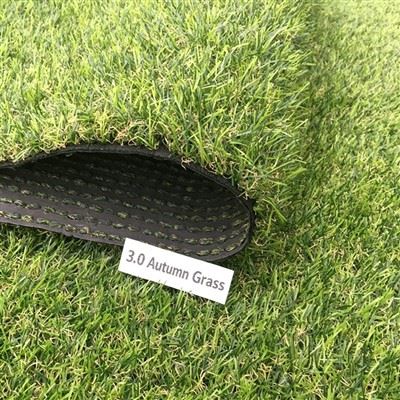
If you’re ready to upgrade your rooftop or install artificial turf for the first time, reach out to our team to discuss your project, get a custom quote, or ask any questions you have about how turf will look at night. We’ve worked on all types of rooftop spaces, from small residential terraces to large commercial rooftops, and we can help you design a space that works for you, no matter the time of day.
Rooftop Artificial Turf References:
- American Society of Landscape Architects. (2022). Rooftop Landscaping Best Practices for Urban Environments.
- Synthetic Turf Council. (2023). Performance Standards for Outdoor Artificial Turf.
- National Roofing Contractors Association. (2021). Roof Load and Drainage Guidelines for Rooftop Amenity Spaces.
- Lighting Research Center, Rensselaer Polytechnic Institute. (2020). Warm vs. Cool LED Lighting for Outdoor Residential Spaces.
Yiwu Duofu Artificial Flower Co., Ltd.
As one of the most professional rooftop artificial turf manufacturers and suppliers in China, our products have good reputation in the market. Please feel free to wholesale bulk custom made rooftop artificial turf from our factory. Good service and quality products are available.
Address: Building B, No. 566 Chunhua Road
E-mail: 13373813738@aliyun.com
WebSite: https://www.chinaturffactory.com/
