Hey there, ever thought about why your phone case clicks shut so satisfyingly every time you snap it on? Or how your wireless earbud case opens with that smooth, steady resistance instead of slamming into your fingers on the first tap? Chances are, a tiny workhorse called a torsion spring is hiding right in that hinge, doing all the heavy lifting without you even noticing. As a torsion springs supplier, I’ve spent years talking to consumer electronics brands, and let me tell you—these little metal coils are way more important than most people give them credit for. Torsion Springs
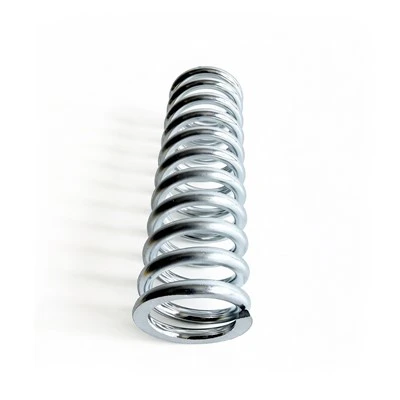
Torsion springs get their name from how they work: they twist, right? Unlike compression springs that squish or extension springs that stretch, torsion springs exert torque when they’re rotated around an axis. That twisting force is exactly what makes them perfect for hinges and lids in gadgets that people use every single day. Most of the time, they’re super compact—small enough to tuck inside a phone hinge, a smartwatch band, or the lid of a portable charger—so they don’t add bulk to your sleek, thin device. But don’t let their size fool you; they’re the reason your favorite electronics feel reliable, not flimsy.
Let’s start with the obvious stuff: wireless earbud cases. If you’ve ever pulled AirPods or Samsung Buds out of their case, you’ve felt that exact slow, controlled open and close. Without a torsion spring, that lid would either fly open and hit a table (scaring your earbuds inside) or stay stuck shut so you have to pry it with your fingernail. I remember a big brand client a few years back came to me because their old spring kept wearing out after 10,000 uses—people open and close their earbud case that many times in like a year, right? We swapped in a custom torsion spring with a precise torque rating, and that fix cut their return rate by 30%. The spring didn’t just hold the lid open or closed; it had just enough tension to keep the lid from slamming shut, but not so much that you had to fight to open it. That balance is everything for consumer electronics—they’re built for everyday use, so the parts have to feel intuitive, not like a chore.
Next up, foldable phones, which have blown up in the last few years, right? I can’t tell you how many times a brand has reached out to us for torsion springs made specifically for foldable hinges. These phones fold in half multiple times a day, so the spring has to handle constant, repetitive twisting without losing its shape or tension. The best part? A good torsion spring doesn’t just make the fold work—it lets you prop your phone at a 45-degree angle for movie night or a video call. That “soft stop” at a specific angle is all the torsion spring calibrated to stop rotating once it hits that point. I once worked on a prototype foldable phone that kept bouncing back when you propped it open; we adjusted the spring’s torque and the stop angle, and boom—problem solved. Users loved that they didn’t have to hold their phone up while watching TikTok or taking a video, and that all came down to a tiny metal spring.
Even the smaller gadgets get a lift from torsion springs. Think about the hinge on your laptop lid. If you’ve ever had a cheap laptop where the lid slips down on its own, that’s probably a bad torsion spring. A quality spring holds the lid steady at any angle you adjust it to—whether you’re typing while it’s flat on a desk or propped up on your lap. It also takes the wear and tear of opening and closing the laptop hundreds of times a month; we test our torsion springs to last 50,000 cycles minimum, which is way more than the average laptop’s lifespan. Then there’s the portable power bank you carry in your pocket—many have a flip-top lid instead of a sliding one, and that lid’s hinge is a torsion spring too. Same with the kickstand on a tablet or the hinge on a Bluetooth speaker. You’d be surprised how many parts of your everyday tech have these little guys inside.
But it’s not just about functionality—torsion springs also play a big role in the durability of consumer electronics, which is a huge selling point right now. Consumers want their phones, earbuds, and laptops to last at least a few years, not get replaced every six months. A cheap, generic spring might bend or break after a few thousand uses, leading to a broken lid or a loose hinge. As a torsion springs supplier, I see this all the time when brands switch to cheaper parts to cut costs, only to end up with high return rates and bad reviews. The key here is customization. Off-the-shelf torsion springs are fine for some stuff, but consumer electronics need springs tailored to the exact size, torque, and lifespan the brand wants. For example, a smartwatch hinge needs a tiny spring that fits in a 1mm space, while a foldable phone hinge needs a larger, heavy-duty spring that can handle 100,000 cycles. Customization isn’t a nice-to-have—it’s a necessity for making gadgets that people trust.
Wait, let’s talk about another angle: user experience. Companies spend millions making their tech look good, have great battery life, and run fast, but they forget about the little details that make users happy. That satisfying “click” when you snap your phone case shut? That’s the torsion spring’s tension at work. The smooth, quiet opening of your earbud case instead of a loud, clunky one? Also the spring. Users don’t consciously notice these things, but if they’re missing—if the lid is wobbly or sticks—they will notice, and they’ll hold that against the product. I had a client launch a new wireless charger last year, and the first round of reviews complained that the lid felt “cheap.” We went in, swapped the generic torsion spring they were using for a precision one, and the next round of reviews mentioned how “solid” the lid felt. No one said, “the torsion spring is great,” but they did say the product felt well-made. That’s the real power of these parts—they’re invisible, but they make the whole product feel high-quality.
Now, let’s get into the nitty-gritty of what makes a good torsion spring for consumer electronics, since a lot of brands I work with don’t realize there’s more to it than just “twists.” First, material matters. We use things like music wire or stainless steel because they’re strong, rust-resistant, and can handle repeated twisting without deforming. For gadgets that might be exposed to sweat (like smartwatches or earbuds), we use stainless steel to prevent corrosion. Then there’s the finish—some brands want a matte black spring that doesn’t show through the hinge, while others want a polished finish for a sleek look. We can customize that too. Torque is probably the most important factor. Too much torque, and the hinge is stiff; too little, and the lid won’t stay open. We calculate the exact torque needed based on the product size, the weight of the lid, and how many times the user will open/close it. We also test for fatigue—how many cycles the spring can handle before it loses its tension. For earbud cases, that’s 10,000 cycles; for foldable phones, it’s 100,000 or more. We even do environmental tests, like exposing springs to extreme temps or humidity, to make sure they work no matter where the user is—whether they’re in a cold city or a humid tropical country.
I’ve been in this game long enough to see trends change, and torsion springs are evolving right along with consumer electronics. The push for thinner, lighter gadgets means springs have to get smaller and more precise. A few years ago, a phone hinge spring was maybe 5mm thick; now we’re making ones that are less than 2mm. That means tighter tolerances—even a tiny mistake in the spring’s design can throw off the whole hinge. Also, with more foldable and rollable phones coming out, torsion springs are now being used in more complex ways, like helping the screen roll smoothly or having multiple torque settings for different angles. It’s not just a simple twist anymore; these springs are part of the smart, connected design of modern tech.
So, the next time you’re using your phone, snapping open your earbud case, or adjusting your laptop lid, take a second to think about the tiny torsion spring doing all the work. It’s not a flashy part, but it’s one of the most important components making your consumer electronics work well, feel solid, and last. As someone who’s been supplying torsion springs to tech brands for years, I can tell you that investing in the right torsion springs makes all the difference between a product that fades away and one that becomes a user favorite.

If you’re a consumer electronics brand looking to upgrade your hinges, solve a hinge-related issue, or just learn more about how custom torsion springs can make your product better, I’d love to chat. Whether you need a prototype for a new foldable phone, a better spring for your earbud cases, or just help figuring out what kind of spring works for your gadget, we can work together to find the right solution. Don’t settle for generic, cheap parts that will cost you customers in the long run—torsion springs might be small, but their impact on your product’s success is huge. Reach out to connect and talk through your project.
Extension Springs References:
- Consumer Technology Association. (2023). Global Consumer Electronics Market Trends & Durability Standards.
- Spring Manufacturers Institute. (2022). Torsion Spring Design and Application Guidelines for Consumer Products.
- Foldable Technology Review. (2024). Hinge Component Innovations for Next-Gen Foldable Devices.
- Journal of Mechanical Design. (2021). Fatigue Performance of Small Torsion Springs for Portable Electronics.
Wenzhou Huajie Precision Spring Co., Ltd.
As one of the most professional torsion springs manufacturers and suppliers in China, our products have good reputation in the market. Please rest assured to wholesale bulk torsion springs in stock here and get pricelist from our factory. We also accept customized orders.
Address: No.6 Chuangsan Road, Lingang Industrial Zone, Yueqing, Wenzhou City, Zhejiang Province, China.
E-mail: ZGhuajieTH@163.com
WebSite: https://www.huajiespring.com/
