When I was on a site visit last spring to a commercial building in downtown Cleveland, the project engineer pulled me aside during a lightning storm that rolled through the area. “We’ve got three 480V switchgear units here, and I’ve always wondered how they keep our equipment from frying when the sky opens up like this,” he said, shouting over the crack of thunder in the distance. That question stuck with me, because it’s not just a curious one—it’s the core of why we build the switchgear we do, and it’s the same question our team gets almost every time we meet with a new client. As a switchgear supplier with over 18 years in the business, I’ve learned that protecting against lightning isn’t just about slapping on a part and calling it done—it’s a layered, intentional system that starts long before a storm ever hits. Let me break down how it works, straight from the shop floor where we build every unit we ship. Switchgear
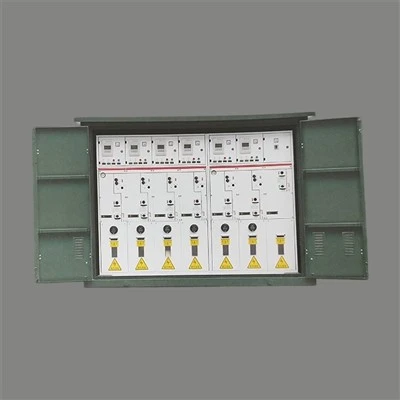
First, I need to set the scene: lightning isn’t just a random spark. A single cloud-to-ground strike can carry up to 100,000 amps of current, and it can hit within a mile of your property without you seeing a direct bolt—sometimes those are called “near strikes,” and they’re actually more dangerous because their current travels through power lines before anyone realizes what’s happening. That current surges through electrical systems in nanoseconds, fast enough to damage circuit boards, blow transformers, or take out entire switchgear assemblies before a breaker can even trip. Our job as switchgear suppliers is to stop that surge before it reaches the sensitive equipment downstream, and to do that in a way that doesn’t disrupt power for the parts of the building that need it.
The first layer of protection we integrate into every medium and low-voltage switchgear unit we build is surge protection devices (SPDs)—but not the cheap off-the-shelf ones you can pick up at a hardware store. The SPDs we spec are type-tested to international standards, and we mount them directly inside the switchgear’s main enclosure, at the point where power enters the unit. Why there? Because every foot of wire between the surge and the sensitive equipment gives the lightning current more space to bounce around, creating secondary surges that can cause hidden damage. I see this mistake all the time: contractors will buy a cheap SPD and mount it on the outside of a building’s main panel, 20 or 30 feet away from the switchgear. By the time that surge travels that distance, it’s split into multiple smaller surges that hit VFDs, PLCs, and computer systems all at once. The SPDs we build into our switchgear intercept that surge the second it gets through the main disconnect, and they divert the excess current straight to the ground, where it can safely dissipate into the earth.
But SPDs aren’t enough on their own. Last year, we worked on a project for a food processing plant in Wisconsin that had old switchgear from the 1990s. They’d added cheap SPDs on their own, and during a thunderstorm that summer, two of the SPDs exploded—they couldn’t handle the intensity of a direct near strike, and the force damaged the main bus inside their switchgear. That’s why the second layer of lightning protection we integrate is the main switchgear’s grounding system. We don’t just run a single grounding wire to our units; we build a dedicated ground bus inside every switchgear cabinet, sized to carry the maximum expected lightning current. That bus is connected to the building’s ground grid at multiple points, not just one—so if one connection fails, there are others to carry the load. I always tell our installation team that the ground grid is like a fire hose: it has to be big enough and connected well enough to carry the “water” (lightning current) all the way to the ground without leaking or bursting. In the Wisconsin project, we replaced their old switchgear with units that had our custom-sized ground bus, and we worked with their electrician to expand their building’s ground grid to include four separate connections, not two. A month later, another storm hit, and they called us to say their new switchgear didn’t trip at all—while the old panels on a neighboring property had to be replaced.
Another often-overlooked part of switchgear lightning protection is the busbar and insulation design. When we build our switchgear, we use copper busbars that are thick enough to handle both normal current and the short, intense burst of lightning current. We also use high-dielectric insulation on all internal components—insulation that can withstand thousands of volts without breaking down when a surge hits. A few years ago, we did a side-by-side test for a client who was comparing our switchgear to a cheaper brand. We simulated a 50,000 amp surge—way more than a typical near strike—on both units. The cheaper brand’s bus insulation broke down, causing an arc inside the cabinet, while our insulation held, and the SPD diverted the surge to the ground. That’s not a coincidence; it’s part of our quality control process. Every switchgear unit we ship goes through a dielectric test before it leaves our facility, and we adjust the insulation specs based on the climate the unit is going to. For clients in Florida or the Gulf Coast, where lightning strikes are 20 times more common than in the Midwest, we use even heavier insulation and additional surge suppression components to match the higher risk.
I also want to talk about coordination, because that’s the part that trips up a lot of project teams. Lightning protection isn’t just the switchgear—it’s a system that works with other components. The lightning rods on the building’s roof, the overhead power lines’ surge arresters, the main service entrance SPD, and our switchgear all have to work in sync. If one component is too slow to respond, the surge will get past it and damage the switchgear. That’s why our engineers work directly with project architects and electrical engineers during the design phase, not just when they’re ready to order units. Last year, a hospital in Arizona reached out because their electrical engineer had designed a system with a main service arrester, but hadn’t accounted for the distance between the arrester and the switchgear. Our team calculated that the time it took the surge to travel that distance would mean the switchgear’s internal components would be exposed to a surge before the SPD could activate. We worked with their engineer to adjust the design, moving the SPD inside the switchgear and adding an additional small arrester on the service line, so every part of the system responded at the same time. The hospital’s maintenance team still checks in with us every storm season, and they’ve told us they haven’t had a single surge-related issue since we installed the units.
A common myth I hear all the time is that if you have a lightning rod on your building, your electrical equipment is safe. That’s not true at all. Lightning rods attract the strike, but they don’t stop the surge from traveling through the building’s wiring. A lightning rod will send the current safely to the ground, but if there’s a wire connected to equipment in the building, that current will follow the path of least resistance—and sometimes that path goes straight to your PLCs, HVAC systems, or data centers. Our switchgear is the barrier between that current and the sensitive downstream equipment. I’ll never forget a call we got from a small manufacturing company in Ohio a few years after a storm. They’d had a lightning rod installed, but their entire assembly line went down during a near strike. When they called us, we sent a service technician out to look at their switchgear. We found that their old switchgear didn’t have an internal SPD, so the surge from the near strike traveled through the rod, through the main power line, and blew out 12 of their assembly line motors. We replaced their switchgear within three days, and we included extra SPDs for their motor control centers as well. They told us later that during a storm the next year, the surge hit, and their switchgear diverted it without any issues—they were able to keep running, while a neighbor two blocks away had to shut down for three days to replace damaged equipment.
What I’m most proud of is that this protection doesn’t have to come at a premium. A lot of clients think that lightning-resistant switchgear is only for big industrial sites or skyscrapers, but that’s not the case. We build units for small retail centers, schools, even residential high-rises that are built to handle lightning surges at a price that makes sense. Last year, we worked on a K-12 school in Georgia that had been hit by lightning twice in three years—each time, a classroom’s computer lab was damaged. The district had a tight budget, so we designed a small, low-voltage switchgear unit with integrated SPDs and a reinforced ground bus that fit their needs, and it cost less than adding separate SPDs and upgrading their old panel. After installation, during a storm last spring, the school’s main power flickered, but the switchgear did its job, and none of the computers or lab equipment was damaged. The district’s facilities manager sent us a note saying he’d never seen anything like it—before, they’d lose thousands of dollars in equipment every time a storm hit, and now they didn’t have to worry about it.

At the end of the day, lightning protection with switchgear isn’t about preventing lightning itself. It’s about being prepared for the worst, so that when a storm rolls in, your business, your school, or your facility keeps running. Every switchgear unit we build is designed with that in mind—we don’t cut corners on the parts that matter most, like the SPDs, the ground bus, and the insulation, because we’ve seen what happens when those parts fail. We build every unit in our shop, with our team overseeing every step, and we test each one to make sure it will stand up to whatever Mother Nature throws at it. If you’re working on a new project, or if you’ve had surge-related damage in the past, we’d be happy to walk through your site, look at your current setup, and put together a solution that fits your needs. Protecting your equipment isn’t just a job for us—it’s the reason we show up to work every day. Let’s connect to discuss how we can help your facility stay safe during even the worst storms.
Distribution Box References
IEEE Std C37.90.1, Surge Withstand Capability (SWC) Tests for Relays and Relay Systems Associated with Electric Power Apparatus
National Electrical Manufacturers Association (NEMA) Standard SG-4, Surge Protection for Low-Voltage Power Systems
Underwriters Laboratories (UL) 1449, Surge Protective Devices
Shijiazhuang Nuo’an Electric Power Equipment Co., Ltd.
As one of the most professional switchgear manufacturers and suppliers in China, we’re featured by quality products and good price. Please rest assured to buy advanced switchgear made in China here and get pricelist from our factory. Customized orders are welcome.
Address: NW Corner, Heping Rd & Xingsingsi St, North Baifo Village, Chang’an Dist, Shijiazhuang, Hebei, China
E-mail: nuoandianli3@163.com
WebSite: https://www.nuoanpower.com/
