Hey there! I’m a supplier of Hollow Fiber Ultrafiltration Membranes, and today I wanna chat about how membrane surface modification can have a huge impact on the performance of these membranes. Hollow Fiber Ultrafiltration Membrane
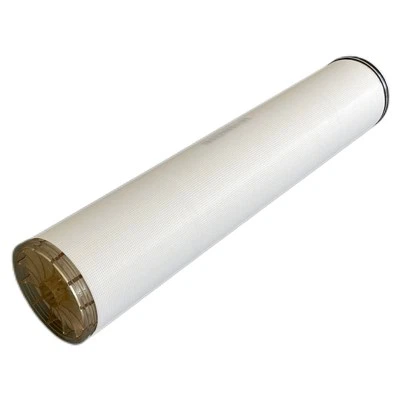
First off, let me give you a quick intro to Hollow Fiber Ultrafiltration Membranes. They’re super useful in a bunch of industries, like water treatment, food and beverage processing, and even in the medical field. These membranes work by allowing small molecules and solvents to pass through while retaining larger particles, like germs, bacteria, and some macromolecules. It’s a pretty nifty technology, but the performance can vary a lot based on a bunch of factors, one of the most important being the surface properties of the membrane.
So, what exactly is membrane surface modification? Well, it’s all about changing the surface of the membrane to improve its performance. There are several ways to do this, and each method can bring different benefits.
One common method is coating. We can coat the surface of the hollow fiber membrane with a thin layer of a special material. This coating can do a bunch of things. For example, it can make the membrane more hydrophilic. Hydrophilic means it loves water. When a membrane is more hydrophilic, water can pass through it more easily. This leads to higher water flux, which is basically how much water can flow through the membrane in a given time. In our business, higher water flux is great because it means we can treat more water faster.
Let’s say you’re running a water treatment plant. With a membrane that has been coated to be more hydrophilic, you can process a larger volume of water, and that can save you a ton of time and money. It’s like having a super – fast lane on a highway for water molecules!
Another advantage of coating is that it can improve the membrane’s resistance to fouling. Fouling is a big headache in the membrane world. It happens when particles, like dirt, proteins, or other organic matter, stick to the membrane surface and clog up the pores. This reduces the membrane’s performance over time. But a well – chosen coating can act as a shield. It can prevent these particles from sticking to the membrane in the first place. For instance, some coatings have a smooth surface that makes it difficult for particles to adhere. Others have chemical properties that repel the foulants.
We’ve seen a lot of our customers who were struggling with fouling issues. After switching to our membranes with anti – fouling coatings, they noticed a significant improvement. The membranes lasted longer, and they didn’t have to clean them as often. Cleaning membranes can be a hassle, and it also costs money in terms of chemicals and labor. So, reducing fouling is a win – win situation.
Another way to modify the membrane surface is through grafting. Grafting involves attaching specific chemical groups or polymers to the membrane surface. This can change the surface charge of the membrane. You see, many of the particles that we want to separate or retain have an electric charge. By changing the surface charge of the membrane, we can use electrostatic forces to our advantage.
For example, if the particles we’re trying to remove are positively charged, we can graft negatively charged groups onto the membrane surface. The opposite charges will attract, and the particles will stick to the membrane, making it easier to filter them out. This can improve the selectivity of the membrane, which is how well it can separate different types of particles. In some applications, like separating proteins in the biotech industry, high selectivity is crucial.
Grafting can also improve the mechanical properties of the membrane. Sometimes, during the filtration process, the membrane has to withstand a lot of pressure. A membrane with better mechanical strength is less likely to break or deform under stress. By grafting certain polymers, we can make the membrane more robust and durable. This is especially important in high – pressure applications, like reverse osmosis pre – treatment, where the membrane has to handle a lot of force.
Now, let’s talk about plasma treatment. This is a bit of a high – tech method. Plasma is a state of matter that consists of ions, electrons, and neutral particles. When we expose the membrane to a plasma, the high – energy particles in the plasma can react with the membrane surface. This can etch the surface, creating tiny pores or rough spots. These changes can increase the surface area of the membrane.
A larger surface area means more space for water and solutes to pass through. This can lead to an increase in the water flux, just like the hydrophilic coating. Plasma treatment can also modify the chemical composition of the membrane surface. For example, it can introduce functional groups that make the membrane more reactive or more resistant to certain chemicals.
We’ve used plasma treatment on some of our membranes, and the results have been really impressive. The membranes can handle more challenging feed waters, and they show better overall performance. But it’s not all sunshine and rainbows. Plasma treatment can be a bit tricky to control, and it requires specialized equipment.
When it comes to the performance of our Hollow Fiber Ultrafiltration Membranes in the market, membrane surface modification gives us a real edge. Customers are always looking for membranes that can offer high water flux, good selectivity, and long – term stability. By using these modification techniques, we can meet and even exceed their expectations.
For example, in the food and beverage industry, they need membranes that can filter out impurities without affecting the taste and quality of the product. Our modified membranes can do just that. They can retain particles like bacteria and yeast while allowing the flavor and aroma compounds to pass through. This helps our customers produce high – quality food and beverages.
In the medical field, the requirements are even more stringent. Membranes need to be biocompatible, which means they can’t cause any adverse reactions when used in contact with the human body. Surface modification can help us achieve this. We can modify the membrane surface to make it more friendly to biological tissues, which is crucial for applications like blood purification.
We’ve also found that our modified membranes are more cost – effective in the long run. Although the initial cost of developing and producing these membranes might be a bit higher, the reduced fouling and longer lifespan mean that our customers can save money on replacement and maintenance.
So, if you’re in the market for Hollow Fiber Ultrafiltration Membranes, you should definitely consider the benefits of surface – modified membranes. They can offer better performance, more reliability, and ultimately, a better return on your investment.

If you’re interested in learning more about our products or want to discuss your specific needs, don’t hesitate to reach out. We’re always happy to have a chat and see how we can help you with your filtration requirements. Whether you’re a small – scale operation or a large industrial plant, we’ve got the solutions for you.
Containerized Water Treatment System References
- Cheryan, M. (1998). Ultrafiltration and Microfiltration Handbook. Technomic Publishing.
- Baker, R. W. (2012). Membrane Technology and Applications. Wiley.
- Mulder, M. (1996). Basic Principles of Membrane Technology. Kluwer Academic Publishers.
Hangzhou Nanoimp Environmental Technology Co., Ltd.
With abundant experience, we are one of the most professional hollow fiber ultrafiltration membrane manufacturers and suppliers in China. Welcome to wholesale high quality hollow fiber ultrafiltration membrane in stock here and get pricelist from our factory. We also accept customized orders.
Address: Road 25, Baiyang Street, Qiantang District, Hangzhou City, Zhejiang Province
E-mail: keith.wang@nano-sepmer.com
WebSite: https://www.nanoimp-membrane.com/
