Hey there! I’m a supplier of Deionized Water Systems, and today I wanna talk about the pressure requirement for these systems. It’s a topic that might seem a bit technical at first, but I’ll break it down in a way that’s easy to understand. Deionized Water System
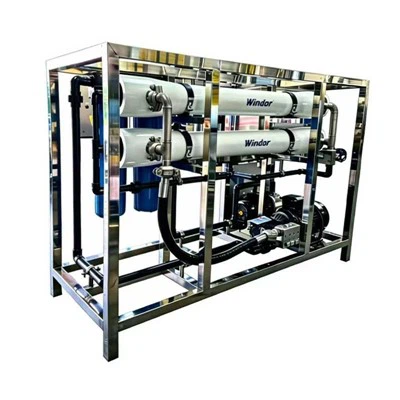
First off, let’s get a basic idea of what a Deionized Water System does. In simple terms, it’s designed to remove ions from water, making it super pure. This kind of water is used in a bunch of industries like electronics manufacturing, pharmaceuticals, and even in some laboratories. The purity of the water is crucial in these applications, as even tiny amounts of ions can cause problems.
Now, let’s dive into the pressure. Pressure plays a major role in the operation of a Deionized Water System. It affects how efficiently the system can remove ions from the water. If the pressure is too low, the water might not flow through the system quickly enough, and the ion – exchange resins (which are like little sponges that soak up the ions) won’t work as effectively. On the other hand, if the pressure is too high, it can cause damage to the system components, like the membranes or the resin beds.
There are actually a few different pressure points in a Deionized Water System that we need to consider.
Inlet Pressure
The inlet pressure is the pressure of the water coming into the system. For most standard Deionized Water Systems, an inlet pressure of around 30 to 80 psi (pounds per square inch) is ideal. This gives the water enough force to move through the pre – treatment filters (which remove larger particles like sediment and dirt) and then into the main ion – exchange sections.
If the inlet pressure is below 30 psi, the water flow might be too slow. This can lead to incomplete ion removal because the water is spending too much time in contact with some parts of the resin beds and not enough time in others. As a result, the quality of the deionized water coming out of the system might not meet the required standards.
Conversely, if the inlet pressure goes above 80 psi, it can be a real problem. High pressure can cause the pre – treatment filters to clog up faster, as the water is forcing more particles into the filter media. It can also cause the ion – exchange resin beads to break apart, reducing their lifespan and effectiveness.
Pressure Drop across Filters
As the water passes through the pre – treatment filters and the main ion – exchange columns, there’s going to be a pressure drop. This is normal and to be expected. The pressure drop is a measure of how much the pressure decreases as the water moves through these components.
For pre – treatment filters, a pressure drop of around 5 to 10 psi is typical. This means that if the inlet pressure is 50 psi, after passing through the pre – treatment filter, the pressure might drop to 40 – 45 psi. If the pressure drop across the pre – treatment filter is too high, say more than 15 psi, it’s a sign that the filter is clogged and needs to be replaced.
In the main ion – exchange columns, the pressure drop is usually a bit more complex. It depends on factors like the type of resin used, the flow rate of the water, and the amount of ions in the incoming water. Generally, a pressure drop of 10 to 20 psi across the ion – exchange columns is considered normal. If this pressure drop starts to increase significantly over time, it could mean that the resin is getting fouled or that there’s some kind of blockage in the column.
Outlet Pressure
The outlet pressure is the pressure of the deionized water coming out of the system. This pressure needs to be high enough to push the water to its final destination, whether it’s into a storage tank or directly into a manufacturing process.
Typically, an outlet pressure of around 20 to 60 psi is sufficient for most applications. If the outlet pressure is too low, the water might not reach its destination effectively. For example, in an industrial manufacturing process, low outlet pressure could result in inconsistent water delivery to the production equipment, which can affect the quality of the final product.
Now, how do we control these pressures in a Deionized Water System? Well, there are a few ways.
Pressure – regulating Valves
These are devices that are installed in the system to control the inlet and outlet pressures. They work by adjusting the flow of water based on the pressure readings. For example, if the inlet pressure starts to get too high, the pressure – regulating valve will restrict the flow of water, bringing the pressure down to the desired level.
Flow – control Valves
Flow – control valves are also important. They help to maintain a consistent flow rate of water through the system. By controlling the flow rate, we can indirectly control the pressure drop across the filters and the ion – exchange columns. If the flow rate is too high, the pressure drop will be greater, and vice versa.
Monitoring and Maintenance
Regular monitoring of the pressure in a Deionized Water System is crucial. This can be done using pressure gauges that are installed at different points in the system, such as at the inlet, across the filters, and at the outlet. By keeping an eye on these pressure readings, we can detect any problems early on.
For example, if we notice that the pressure drop across a filter is increasing steadily over a few days, we can take action to replace the filter before it causes any major issues. Similarly, if the outlet pressure starts to drop, we can check for blockages in the pipes or problems with the pressure – regulating valves.
In addition to monitoring, proper maintenance of the system is essential to ensure that the pressure remains within the desired range. This includes regular cleaning of the filters, replacing the ion – exchange resins when they’re exhausted, and checking the integrity of the pipes and valves.
So, why does all this matter to you? If you’re in an industry that relies on high – purity deionized water, getting the pressure right in your Deionized Water System is crucial. It can directly impact the quality of your end product, the efficiency of your manufacturing process, and the lifespan of your equipment.
If you’re looking for a reliable Deionized Water System that can maintain the right pressure for your specific needs, I’m here to help. Whether you’re just starting out and need a small – scale system for a laboratory or you’re an established industrial manufacturer in need of a large – scale setup, we’ve got the expertise and the products to meet your requirements.
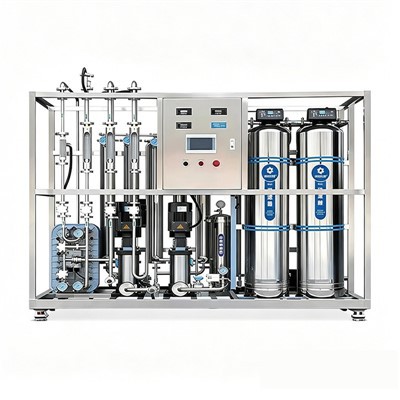
Don’t hesitate to reach out if you have any questions about the pressure requirements for your Deionized Water System or if you want to discuss potential solutions for your business. We can have a detailed conversation about your needs and come up with a customized plan that works for you.
Industrial RO Equipment References
- Water Treatment Handbook, various industry – specific editions
- Technical papers on deionized water systems from leading manufacturers and research institutions
- Personal experience and knowledge gained from years in the deionized water system supply business
Shandong Yanuo Environmental Protection Equipment Co., Ltd.
We’re well-known as one of the leading deionized water system manufacturers and suppliers in China, featured by quality products and good price. Please rest assured to buy bulk deionized water system made in China here from our factory. Customized orders are welcome.
Address: North Side of the Road, 1,000 Meters West of the Intersection of Fenghuangshan West Road and Provincial Highway S102, Wangfu Subdistrict, Qingzhou City, Weifang City, Shandong Province.
E-mail: ynhb.499973983@gmail.com
WebSite: https://www.zkyaruo.com/
