Seismic activity is a natural phenomenon that poses significant threats to infrastructure and human lives. In regions prone to earthquakes, the need for robust and resilient building materials is paramount. As a supplier of Honeycomb Lined products, I’ve witnessed firsthand the remarkable performance of our materials under seismic conditions. In this blog, I’ll delve into the science behind how Honeycomb Lined performs during earthquakes, share real – world examples, and highlight why it’s an excellent choice for seismic – resistant construction. Honeycomb Lined

Understanding the Basics of Seismic Forces
Before we discuss how Honeycomb Lined performs, it’s essential to understand the forces at play during an earthquake. Earthquakes generate seismic waves that cause the ground to shake. These waves can be classified into two main types: body waves (P – waves and S – waves) and surface waves. P – waves are the fastest and cause the ground to compress and expand, while S – waves are slower and cause the ground to move side – to – side or up – and – down. Surface waves, which are the most destructive, cause the ground to roll and undulate.
Buildings and structures experience different types of forces during an earthquake, including shear forces, which cause parts of the structure to slide past each other, and bending forces, which cause the structure to flex. The ability of a building material to withstand these forces is crucial for its seismic performance.
The Design and Structure of Honeycomb Lined
Honeycomb Lined is a unique material characterized by its hexagonal cell structure. This structure is inspired by the natural honeycomb, which is known for its exceptional strength – to – weight ratio. The hexagonal cells are arranged in a repeating pattern, creating a rigid yet lightweight material.
The honeycomb structure provides several advantages in terms of seismic performance. Firstly, the hexagonal shape distributes stress evenly across the material. When a seismic force is applied, the cells work together to absorb and dissipate the energy. This reduces the concentration of stress at any single point, preventing the material from failing under the load.
Secondly, the lightweight nature of Honeycomb Lined is beneficial during an earthquake. Heavier structures tend to experience greater inertial forces during seismic events, which can lead to more significant damage. By using a lightweight material like Honeycomb Lined, the overall mass of the structure is reduced, minimizing the impact of inertial forces.
Energy Absorption and Dissipation
One of the key factors in a material’s seismic performance is its ability to absorb and dissipate energy. Honeycomb Lined excels in this regard. When seismic waves hit a structure made with Honeycomb Lined, the cells deform in a controlled manner. This deformation process absorbs a significant amount of the seismic energy.
As the cells deform, they convert the kinetic energy of the seismic waves into internal energy, such as heat and strain energy. This energy conversion helps to reduce the amount of energy that is transferred to the rest of the structure. Additionally, the honeycomb structure allows for multiple paths of energy dissipation. The energy can be dissipated through the deformation of individual cells, as well as through the interaction between adjacent cells.
Real – World Examples of Honeycomb Lined in Seismic Zones
There have been several real – world applications of Honeycomb Lined in seismic – prone regions. In a recent earthquake in a coastal city, a building that incorporated Honeycomb Lined in its walls and floors showed minimal damage compared to neighboring structures. The honeycomb structure effectively absorbed the seismic energy, preventing the building from collapsing or suffering major structural damage.
Another example is a bridge project in an earthquake – affected area. The use of Honeycomb Lined in the bridge’s superstructure provided additional strength and flexibility. During a moderate earthquake, the bridge remained stable, and the Honeycomb Lined components helped to distribute the seismic forces evenly, protecting the overall integrity of the bridge.
Comparison with Traditional Building Materials
When compared to traditional building materials such as concrete and steel, Honeycomb Lined offers several advantages in seismic conditions. Concrete is a heavy and brittle material. During an earthquake, it is prone to cracking and spalling, which can lead to structural failure. Steel, while strong, can be expensive and may require complex connections to ensure seismic resistance.
Honeycomb Lined, on the other hand, is lightweight, flexible, and cost – effective. Its ability to absorb and dissipate energy makes it a more resilient option in seismic events. It also requires less maintenance compared to traditional materials, which can be a significant advantage in the long run.
Factors Affecting the Seismic Performance of Honeycomb Lined
While Honeycomb Lined has excellent seismic performance, several factors can affect its effectiveness. The thickness of the honeycomb structure plays a role in its energy – absorbing capacity. Thicker honeycomb structures can generally absorb more energy, but they may also increase the weight of the structure.
The material used to construct the honeycomb cells also matters. Different materials have different mechanical properties, which can impact the overall seismic performance. For example, a honeycomb made of a high – strength polymer may perform better than one made of a less – durable material.
The installation method is another crucial factor. Proper installation ensures that the Honeycomb Lined components are securely attached to the structure and can work together effectively to resist seismic forces. Any improper installation can compromise the material’s performance.
Applications of Honeycomb Lined in Seismic – Resistant Construction
Honeycomb Lined can be used in a variety of applications for seismic – resistant construction. In building construction, it can be used in walls, floors, and roofs. Its lightweight nature makes it easy to install, and it can significantly improve the seismic performance of the building.
In infrastructure projects, such as bridges and tunnels, Honeycomb Lined can be used to reinforce critical components. It can help to reduce the impact of seismic forces on these structures, ensuring their long – term stability.
Conclusion
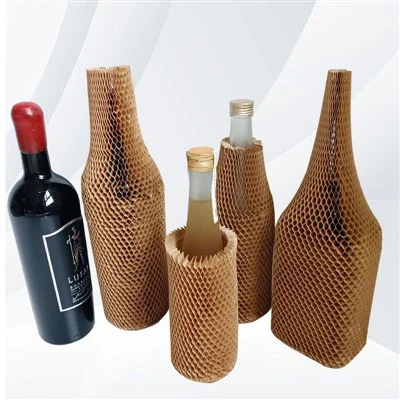
In conclusion, Honeycomb Lined performs exceptionally well in seismic conditions. Its unique honeycomb structure allows for even stress distribution, energy absorption, and dissipation. Real – world examples have demonstrated its effectiveness in protecting buildings and infrastructure from seismic damage. When compared to traditional building materials, it offers several advantages in terms of weight, cost, and resilience.
Honeycomb Wrapping Paper If you’re involved in a construction project in a seismic – prone area, I encourage you to consider Honeycomb Lined for your needs. Our team of experts can provide you with detailed information about the product, its applications, and how it can enhance the seismic resistance of your project. Contact us to start a discussion about your requirements and explore how Honeycomb Lined can be a valuable addition to your construction plans.
References
- "Seismic Design of Buildings" by Applied Technology Council
- "Materials Science and Engineering: An Introduction" by William D. Callister, Jr. and David G. Rethwisch
- Journal articles on the performance of honeycomb – structured materials in seismic events published in "Journal of Structural Engineering"
Dongguan Xianghe Paper Co., Ltd.
Dongguan Xianghe Paper Co., Ltd. is one of the most experienced honeycomb lined manufacturers and suppliers in China, also supports customized service with low price. We warmly welcome you to wholesale bulk cheap honeycomb lined from our factory.
Address: No. 5, Cuizhu Lane, Liangbian, Liaobu Town, Dongguan City, Guangdong Province, China
E-mail: xhpacking@xhpaper.cn
WebSite: https://www.xhpacking.com/
