If you’ve ever worked with industrial gases—whether in pharmaceutical manufacturing, semiconductor production, lab research, or specialty chemical processing—you know that one size almost never fits all. The quiet, leak-free operation of diaphragm compressors makes them a go-to for applications where even the tiniest gas contamination or loss can derail an entire process. But as a diaphragm compressor supplier who’s fielded calls from plant engineers, lab managers, and production leads for over a decade, I can tell you the most common question I get isn’t “What’s a diaphragm compressor?” It’s “Can you build one that works for my exact needs?” Diaphragm Compressor
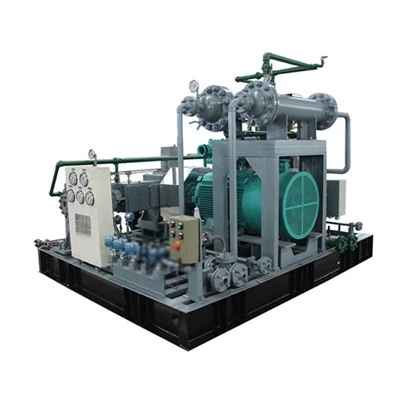
The short answer is yes. But the longer, more honest answer is that customizing diaphragm compressors isn’t just a possibility—it’s the core of how we operate as a supplier. Let’s break down why custom diaphragm compressors aren’t a niche afterthought, how the process actually works, and why they might be the right choice for your next project, no matter how specific your requirements.
First, let’s ground this in what makes diaphragm compressors different from other types, because that’s where their customization flexibility starts. Unlike reciprocating or screw compressors that use pistons or rotors to move gas, diaphragm compressors rely on a flexible metal (or sometimes polymer) diaphragm that pushes gas in and out of a sealed compression chamber. The gas never touches any moving parts, which eliminates contamination risk, reduces leaks, and makes them ideal for high-purity gases like oxygen, hydrogen, helium, or specialty blends used in semiconductor doping. That sealed design is exactly what makes them customizable—because almost every part of that system can be adjusted to match specific gas properties, flow rates, pressure requirements, and even environmental constraints.
I remember a call from a pharmaceutical production manager about three years ago. They were producing a new inhaled medication that required medical-grade oxygen at 250 bar, and their existing compressor was introducing trace amounts of oil, which violated FDA purity standards. Off-the-shelf diaphragm compressors top out around 200 bar for medical oxygen, so a standard unit wouldn’t work. We worked with their engineering team to adjust the diaphragm material, replace standard valve components with titanium alloys (to resist corrosion from high-pressure oxygen), and tweak the motor drive system to handle the higher compression ratio without overheating. The result was a compressor that delivered consistent, contamination-free oxygen at exactly 250 bar, and it passed all their FDA audits on the first try. That’s the kind of customization that can’t be done with a catalog unit.
Customization starts with the gas itself, because that’s the biggest variable for any compressor. If you’re working with a flammable gas like hydrogen, for example, you need a compressor that can eliminate ignition risks at every stage. Standard diaphragms use stainless steel, but hydrogen can permeate through thin steel at high pressures, leading to leaks that are a safety hazard. For a client in the renewable energy sector designing hydrogen refueling stations, we switched to thicker, nickel-alloy diaphragms that block hydrogen permeation and added double-layered diaphragm seals with pressure monitoring—so if the inner layer ever developed a leak, the outer layer would catch it and send an alert before any safety issues arose. For corrosive gases like chlorine or hydrogen sulfide, we can line the compression chamber with Hastelloy or PTFE, adjust valve materials to resist chemical degradation, and even add inert gas purge systems to prevent cross-contamination between the gas being compressed and internal parts. It’s not just swapping parts; it’s engineering the entire system around the specific chemical properties of your gas.
Next comes flow and pressure requirements, which are rarely uniform across industries. Lab research teams might need very low flow rates—like 0.1 standard liters per minute (SLPM) for small-scale gas testing—while a semiconductor manufacturing plant might need 10,000 SLPM of nitrogen at 350 bar for process equipment. Off-the-shelf compressors are usually built for a range that’s too narrow for either end of that spectrum. For a university research lab studying high-pressure gas reactions, we built a mini diaphragm compressor that fits on a standard lab bench, delivers consistent 0.1 to 5 SLPM flow, and runs quietly enough to not interfere with sensitive lab instruments. For a large semiconductor fab in Arizona, we customized a multi-stage diaphragm compressor that handles 12,000 SLPM of ultra-high-purity nitrogen, with precision pressure control that stays within ±0.5 bar across 24-hour production runs. Even the number of compression stages can be adjusted: if you need 400 bar of helium for cryogenics, a four-stage custom build is better than a standard two-stage unit that would waste energy and have higher contamination risk.
Environmental and operational constraints are another huge driver for custom builds, and these are often the most overlooked by clients when they first reach out. A food and beverage client needed a compressor for carbon dioxide that would sit in a cold outdoor storage yard in Minnesota, where temperatures drop to -30°F in winter. Standard compressors are designed for room temperature, so their motors and seals would fail in freezing conditions. We modified the compressor’s motor to include a built-in heating element, used a synthetic sealant that stays flexible at low temperatures, and adjusted the lubrication system to use a cold-rated oil. The result was a unit that works flawlessly in sub-zero temps, with no downtime during peak winter production. On the other end, a chemical plant in Houston needed a compressor that could run 24/7 in a 100°F environment with high humidity, so we added extra cooling fins to the compression head, sealed the electrical components with moisture-resistant coatings, and adjusted the diaphragm drive mechanism to reduce friction and heat buildup. Even noise requirements can be customized: a client near a residential area needed a compressor for welding gas that runs at less than 60 dB, so we enclosed the entire unit in a sound-dampening cabinet and adjusted the motor speed to reduce vibration—something a standard off-the-shelf compressor can’t do.
I know what some of you might be thinking: “Custom sounds great, but isn’t it way more expensive and takes forever to build?” It’s a fair question. Ten years ago, that might have been true, but advances in engineering software and modular component design have made custom diaphragm compressors more accessible than ever. When we work with a client, we start with a 30-minute consultation to map out their exact needs: gas type, pressure, flow, purity requirements, environment, and any operational constraints. We then put together a detailed design proposal within 72 hours, with a clear timeline (usually 4 to 8 weeks for a custom unit, compared to 1 to 2 weeks for a standard one) and transparent pricing, with no hidden fees. We also build our custom units using high-quality, interchangeable core components, so maintenance and repairs are just as easy as with standard units—you don’t need special tools or parts to service a custom compressor we built, because we design it to fit our standard maintenance protocols.
That accessibility is why we’ve seen a 40% jump in custom compressor orders over the last three years, from both small businesses and large multinational corporations. It’s not just about meeting requirements; it’s about reducing long-term costs. A standard compressor might have a lower upfront price, but if it’s not customized to your exact needs, you could face downtime, contamination issues, or safety hazards that end up costing thousands of dollars in lost production or regulatory fines. I’ve seen a client save $50,000 in annual downtime costs by switching from a standard reciprocating compressor to a custom diaphragm unit that eliminated contamination and ran with 20% less energy.
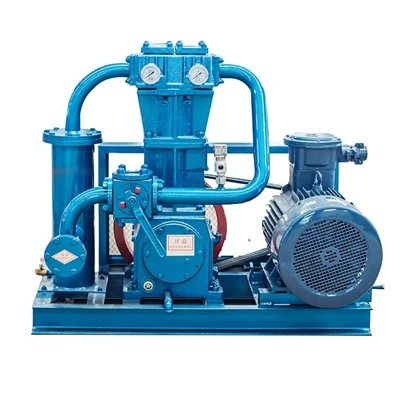
Of course, customization isn’t the right choice for everyone. If you need a small, low-pressure compressor for occasional use in a small lab, a standard unit might work perfectly. But if your needs are specific—high purity, extreme pressure, unique gas properties, harsh environments—customization isn’t just a nice-to-have. It’s the only way to get a compressor that performs reliably, safely, and cost-effectively for years to come.
Centrifugal Air Compressor At the end of the day, diaphragm compressors are all about precision and control. They’re used in applications where mistakes aren’t an option, where a single leak or contamination event can have huge consequences. That’s why we don’t just sell compressors—we partner with our clients to design a system that fits their exact process, no matter how unique it is. If you’ve been struggling to find a compressor that works for your specific needs, don’t settle for a one-size-fits-all unit. We can help. Reach out to discuss your project requirements, and we’ll work with you to build a diaphragm compressor that meets every one of them, from initial design to long-term support.
References
- ASTM International. (2021). Standard Practice for Gas Compressor Purity Requirements for Medical and Pharmaceutical Applications. ASTM D7605-21.
- Fluid Power Society. (2022). Diaphragm Compressor Design for High-Pressure Hydrogen and Specialty Gas Applications. FPS Technical Report 12-22.
- International Society of Automation. (2020). Environmental Adaptation Guidelines for Industrial Compressors in Extreme Temperature and Humidity Environments. ISA-75.01.20.
Shanghai Sollant Energy Saving Technology Co., Ltd.
As one of the most professional diaphragm compressor manufacturers and suppliers in China, we’re featured by quality products and good service. Please rest assured to buy bulk durable diaphragm compressor from our factory. Welcome to view our website for more information.
Address: No.215, Songri Center, Beihongqiao, Jiading District, Shanghai, China.
E-mail: info3@sollant.com
WebSite: https://www.sollant-gas.com/
