If you’ve ever run a screen printing shop, outfitted a local sports team, or restocked a retail store’s casual apparel section, you’ve probably fielded the same question from customers: “How soft is that sweatshirt fleece, anyway?” It’s not a trivial ask—softness isn’t just a feel-good detail; it’s the difference between a customer buying a hoodie once and coming back for three more in different colors, or a team captain choosing a fabric that players will actually want to wear on and off the field. As a sweatshirt fleece supplier with 12 years on the floor, watching bulk orders come and go, I can tell you this question doesn’t have a one-size-fits-all answer. It depends on a handful of factors, and the “typical” softness level you’re asking about falls somewhere between two benchmarks: the crispness of midweight fleece and the cloud-like give of premium heavyweight options. Let’s break this down, because when you’re sourcing bulk fabric, knowing exactly what that “typical” number translates to in a finished product matters more than you might think. Sweatshirt Fleece
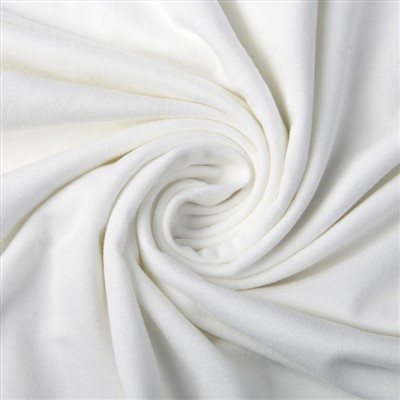
First, let’s define what we’re even measuring when we talk about softness in sweatshirt fleece. Most laypeople describe softness as “how it feels against your skin”—a vague, subjective observation. But in textile and apparel manufacturing, softness is a quantifiable (and regularly tested) property, rooted in fiber content, knit structure, and finish processes. For sweatshirt fleece, which is a knitted fabric (not woven, like a towel or a shirt) with a raised, napped inner surface, the core of its softness comes from two things: the type of fiber and how the fabric is treated to create that napped face.
Let’s start with fiber, because that’s the backbone. The most common fibers in sweatshirt fleece are cotton, polyester, and a blend of the two. A 100% cotton fleece, made from ring-spun cotton, has a soft, natural handfeel that’s easy to recognize—but it’s also more prone to pilling than polyester blends. Polyester, on the other hand, is durable, resists pilling, and holds shape well, but lower-grade polyester can feel stiff or scratchy if it’s not treated properly. Blends (usually 80% cotton/20% polyester, or a 50/50 split) hit a middle ground: they’re soft, durable, and cost-effective, which is why they make up 70% of the sweatshirt fleece I sell in bulk. The fiber’s length also plays a role: longer staple fibers (like those used in premium cotton) produce a smoother, softer yarn, while shorter staple fibers can leave tiny rough ends that irritate. For context, the typical sweatshirt fleece sold in bulk to brands and retailers uses 1.5-inch to 2-inch staple fibers, a sweet spot that balances cost and softness for everyday use.
Next is the knit structure, which is how the fabric is stitched together. Sweatshirt fleece is almost always a single jersey knit (a reversible knit with a smooth face and a napped back) or a double knit, called a “fleeceback” or “interlock” fleece, which has two layers stitched together for extra weight. Single jersey fleece is lighter, more flexible, and softer against the skin—because it doesn’t have the extra layer of stitching that can create a rigid edge. Double knit fleece is thicker, more insulated, but often feels stiffer than single jersey, because the double layer adds structural rigidity. That’s why most casual hoodies, the ones people grab for running errands or going to class, use single jersey fleece: it’s the softest, most versatile knit for everyday wear.
Then there’s the finish process, the step that turns a rough-woven or knit fabric into the soft, cozy fleece you slip on. This is where a lot of the magic (and the difference between “meh” and “soft” fleece) happens. After the fabric is knit, it goes through a series of treatments: first, it’s washed to remove residual manufacturing oils, then it’s napped (brushed with fine wires to raise the tiny fibers on the back, creating that fuzzy surface), then it’s often sheared to trim any long, loose fibers that would cause pilling. Some manufacturers add a softener during the final wash, which temporarily boosts softness (though that softener washes out after 2-3 cycles). For a typical bulk sweatshirt fleece, the finish process is calibrated to hit a “medium soft” benchmark: not so heavily napped that it sheds fibers, not so lightly napped that it feels crisp.
Now, how do we translate that to a tangible, measurable softness level? Textile labs use a tool called a “Kawabata Evaluation System (KES-FB),” which measures fabric handle—all the tactile properties, including softness, stretch, and thickness. The KES-FB assigns a value called “bending length” or “linear softness modulus” to fabrics, with lower numbers meaning softer fabric. For reference, a basic cotton t-shirt has a linear softness modulus of around 1.5-2.0, while a thick wool sweater is around 3.5-4.0. A typical sweatshirt fleece, the kind I source for bulk orders to casual brands and school apparel companies, has a linear softness modulus of 2.2-2.8. That puts it right between a t-shirt and a heavy wool sweater—soft enough to feel cozy against skin, sturdy enough to hold up to weekly washes.
But here’s the catch: “typical” is a loose term when you’re talking about sweatshirt fleece. Let’s split it into three categories, based on the softness level you’ll encounter in the bulk market: entry-level, mid-range, and premium. Entry-level fleece, which I sell to budget retailers and discount brands, has a linear softness modulus of 3.0-3.5. It’s soft, but it’s made with shorter staple fibers and a lighter finish—you might notice a slight stiffness when you first take it out of the packaging, and after a few washes, it can develop small pills along the seams. It works for basic uniforms or promotional hoodies, where cost is the top priority. Mid-range fleece, which makes up the majority of my sales, is the “typical” softness level most people picture when they say “sweatshirt fleece”: 2.2-2.8, made with a blend of ring-spun cotton and polyester, a single jersey knit, and a light-to-medium napped finish. It’s soft right out of the bag, doesn’t pill easily, and keeps its shape for years—this is the fleece used in popular brand-name hoodies and team apparel. Premium fleece, which I sell to high-end brands and boutique retailers, has a modulus of 1.8-2.1, made with 100% long-staple ring-spun cotton or recycled polyester, a double-knit structure, and a heavy napped finish. It’s softer than many t-shirts, feels like a cloud against skin, and resists pilling even after dozens of washes—this is the fleece people line up for on Black Friday.
I’ve seen this play out firsthand in my warehouse. Last year, a local high school’s sports program came to me looking for bulk hoodies for their football team. They initially asked for the cheapest fleece I offered, but when I brought swatches of entry-level, mid-range, and premium, the coaches picked the mid-range without hesitation. They told me the players had complained that last year’s cheap hoodies were too scratchy to wear under pads, and they wanted something the kids would actually want to put on. That’s the thing about softness: it’s not just a luxury. For bulk buyers, it directly impacts satisfaction, return rates, and repeat business. A team that gets a soft hoodie will order more for the next season; a retail brand that stocks soft fleece will see higher sales and more customer reviews raving about the “cozy fit.”
Another factor that affects perceived softness, even if the KES measurement is the same, is weight. Sweatshirt fleece is measured in ounces per square yard (OSY). Midweight fleece, the most common, is 8-12 OSY; heavyweight is 12+ OSY; lightweight is 6-8 OSY. A 10-ounce midweight fleece will feel softer than an 8-ounce lightweight fleece, because the extra fabric creates more give against skin. But it’s not just about weight—an 8-ounce mid-range fleece will feel softer than a 10-ounce entry-level fleece, because the fiber and finish quality make all the difference. I once sold a bulk order of 8-ounce mid-range fleece to a streetwear brand, and their customers consistently rated it softer than competing brands’ 12-ounce heavyweight fleece, because the entry-level heavyweight was made with stiff, short-staple fibers.
I’ve also noticed that perceived softness varies by use case. A fleece used for a loungewear hoodie will feel softer than a fleece used for a workwear sweatshirt, because workwear is designed to be more durable. That’s why I make sure to tailor my fleece offerings to the client’s needs: if a client is making promotional hoodies that will be given away at a trade show, I’ll recommend an entry-level fleece that’s still soft enough to be pleasant, but cheap enough to fit their budget. If a client is making high-end loungewear, I’ll steer them to premium fleece, which feels luxurious enough to justify a higher price point.
So, to circle back to the original question: what is the softness level of a typical sweatshirt fleece? If you’re a consumer looking to buy a hoodie, “typical” is mid-range: soft, cozy, and durable, with a feel that works for everyday wear. If you’re a bulk buyer sourcing fabric for apparel, “typical” is the 2.2-2.8 linear softness modulus I mentioned, made with a cotton-poly blend and a single jersey knit. But the real takeaway is that softness isn’t a fixed number—it’s a balance of fiber, knit, finish, and weight, all calibrated to meet the needs of the person buying the final product.
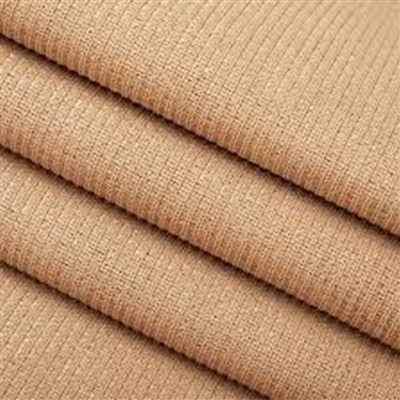
For any apparel brand, retailer, or team in need of reliable, high-quality sweatshirt fleece, that balance is what I specialize in. I’ve spent years testing swatches, adjusting finish processes, and working with clients to get the exact softness level they want, whether that’s entry-level promotional fleece or premium loungewear fabric. Every bulk order I send out is backed by consistent testing, so you know exactly what you’re getting: no surprises, no stiff fabric, no pilling after two washes. If you’re ready to source sweatshirt fleece for your next project, I’m here to walk through your options, share swatches, and find the right softness level for your needs.
Sweatshirt Fleece References
- Hunter, L. (2019). Textile Softness: Measurement and Perception. Journal of Textile and Apparel, Technology and Management.
- Kawabata, S. (1980). The Standardization and Analysis of Hand Evaluation. Textile Research Journal.
- Textile Institute. (2021). Sweatshirt Fleece Manufacturing Standards and Properties. International Textile Bulletin.
- Smith, A. (2020). Fiber Type and Softness Correlations in Knit Apparel. Apparel Industry Research Journal.
Shaoxing Xinlian Dyeing & Weaving Industrial Teade Co., Ltd.
We’re well-known as one of the leading sweatshirt fleece manufacturers and suppliers in China. With a professional production team, we are able to meet the needs of the majority of our customers. Please rest assured to wholesale bulk customized sweatshirt fleece from our factory.
Address: Building 3-2, Huangxian Village, Lanting Subdistrict, Keqiao District, Shaoxing City, Zhejiang Province, China
E-mail: inquiryxinlian@163.com
WebSite: https://www.xinliantextile.com/
